UNIverse - Public Research Portal
Profile Photo

Prof. Dr. theol. Sonja Ammann

Faculty of Theology
Profiles & Affiliations

Selected Publications

Ammann, Sonja. (2024). Der zerbrochene Spiegel. Die babylonische Eroberung Jerusalems als kulturelles Trauma. In Studies in Cultural Contexts of the Bible. Brill Schöningh. https://doi.org/10.30965/9783657793839

URLs
URLs

Ammann, Sonja, Bezold, Helge, Germany, Stephen, & Rhyder, Julia. (2024). Collective Violence and Memory in the Ancient Mediterranean. In Culture and History of the Ancient Near East. Brill. https://doi.org/10.1163/9789004683181

URLs
URLs

Ammann, Sonja. (2022). The Fall of Jerusalem: Cultural Trauma as a Process. Open Theology, 8(1), 362–371. https://doi.org/10.1515/opth-2022-0212

URLs
URLs

Ammann, Sonja, Pyschny, Katharina, & Rhyder, Julia. (2022). Authorship and the Hebrew Bible. In Forschungen zum Alten Testament (Vol. 158). Mohr Siebeck.

Selected Projects & Collaborations

Project cover

Dissertation Dirnberger: Ökonomie des Unheils. Die Motivwelt von Sacharja 11 und die wirtschaftlichen Strukturen im ptolemäischen Judäa

Research Project  | 2 Project Members

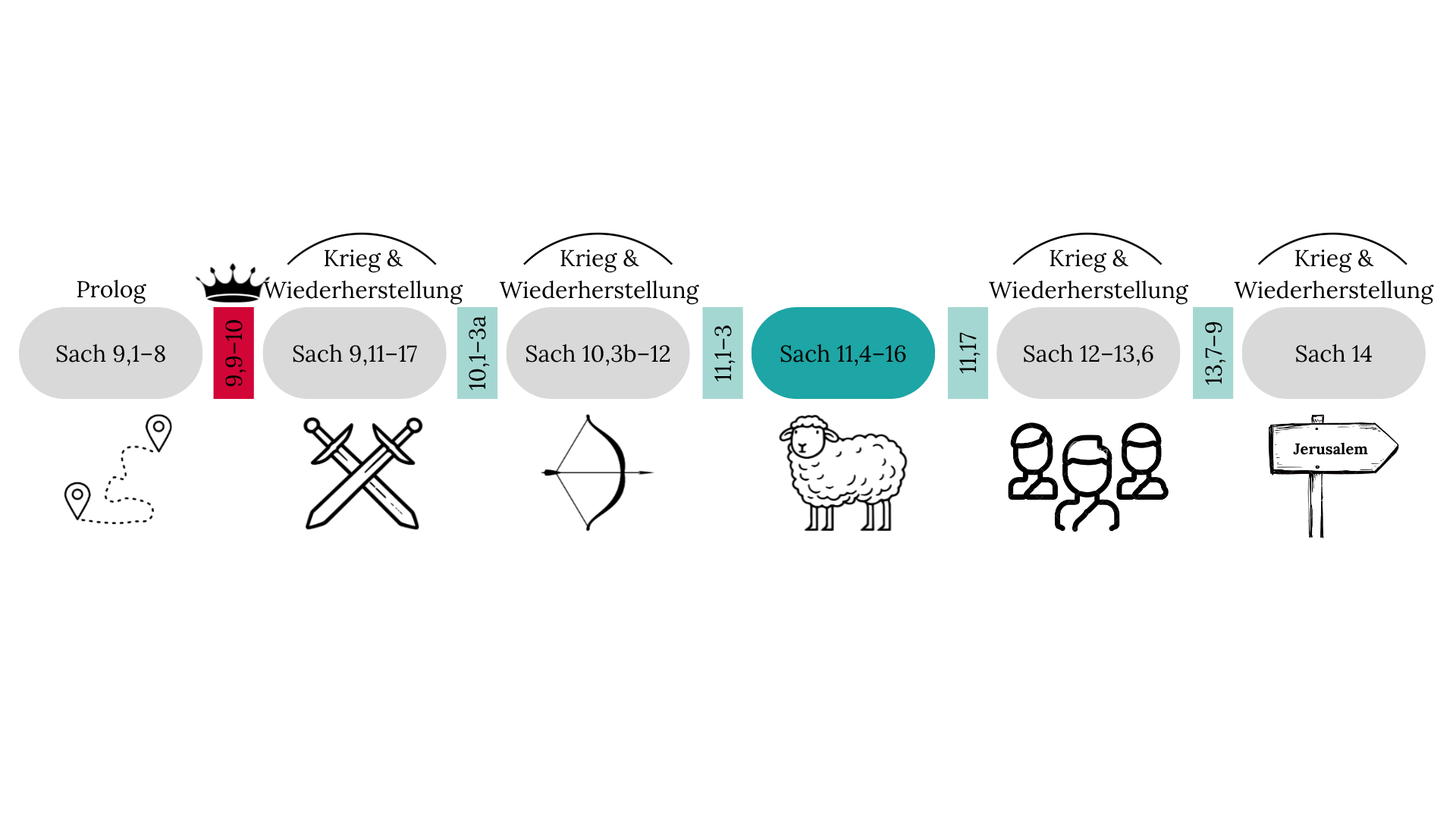
ולא יהיה כנעני עוד בבית יהוה צבאות ביום ההוא , «und es gibt keine Händler mehr im Haus von JHWH Zebaoth an jenem Tag». Mit diesem Satz endet die grosse endzeitliche Vision am Schluss den Sacharjabuches. Dieses überraschende Ende für eine Vision über die Wallfahrt der Völker zur Sukkot-Feier nach Jerusalem, wo JHWH als König über die Welt regiert, fokussiert auf ein Detail, die כנעני , die Händler. Dieses Stichwort verweist zurück in die Mitte des zweiten Teils des Sacharjabuches (Sach 9–14), ins Kap. 11. In Sach 11,4–16 finden wir die Händler als Teil einer Motivwelt von Schlachtschafen, Hirten und Händlern. Diese fällt nicht nur innerhalb des Sacharjabuches, sondern auch im Vergleich mit Hirt-Herde-Motiven in anderen prophetischen Texten des Alten Testaments auf. Es werden Schafe verkauft und gekauft, Reichtümer werden angehäuft, Hirten arbeiten für die Schafhändler und es wird Lohn gezahlt. Diese vielen wirtschaftlichen Elemente in der Motivwelt von Sach 11,4–16 sind in der Forschung bis heute nicht zusammenhängend beleuchtet worden. Die Arbeit unter dem Titel «Ökonomie des Unheils. Die Motivwelt von Sacharja 11 und die wirtschaftlichen Strukturen im ptolemäischen Judäa» will zeigen, dass diese Motivwelt durch eine wirtschaftliche Linse adäquat erfasst werden kann. Darauf aufbauend wird vor dem Hintergrund wirtschaftlicher Entwicklungen im historischen Entstehungskontext von Sach 9–14, dem frühhellenistischen Judäa, ein Gesamtverständnis für den vielschichtigen Text von Sach 11 entwickelt. Durch die Ausleuchtung der Motivwelt durch eine wirtschaftliche Linse werden die verschiedenen Diskurse in ihrem Zusammenwirken greifbar. Aufbauend auf dieser Auslegung von Sach 11 mit wirtschaftlichem Fokus entwickelt diese Arbeit auch zusätzliche Verstehensperspektiven für einzelne Elemente der nachfolgenden Schlussvision in Kap. 12–14, nicht zuletzt für den Schlusssatz des gesamten Sacharjabuches; «und es gibt keine Händler mehr im Haus von JHWH Zebaoth an jenem Tag».

Project cover

Transforming Memories of Collective Violence in the Hebrew Bible

Research Project  | 6 Project Members

Violence in biblical texts is often disturbing to the modern reader. To counter this ethical indignation, current biblical scholarship has pointed out that biblical texts often emerged in reaction to experiences of collective violence and were written from the perspective of the vanquished. Moreover, narratives of past violence - such as narratives of the conquest of Canaan or the book of Esther - are recognized as ideological fiction rather than reliable historical accounts. A growing consensus in biblical scholarship holds that the biblical texts were written mainly after the Babylonian conquest of Jerusalem. The fictional narratives of violence can thus be explained as "counterpresent" memory, stemming from a time when the producers of these texts were in no actual position of power. But as we can see in biblical texts like the books of Maccabees, the counter-historical construction of memory might also go the other way round, producing victimological rather than triumphalist narratives. Comparative evidence from ancient Near Eastern and Greek historical narratives confirms the existence of such patterns. In this project, we will argue that biblical memories of vanquishing and being vanquished are intertwined and need to be studied together as interrelated aspects of the cultural memory of collective violence. In recent years, biblical scholars have increasingly used literary and cultural trauma theories to describe the relationship between experiences of collective violence and their reflection in biblical texts. Building on insights from recent trauma research within and beyond biblical studies, we will explore the cultural function of biblical narratives of collective violence as part of Israel's cultural memory in post-monarchic times. We will draw on V. Volkan's concepts of "chosen trauma" and "chosen glory" as a tool for analysing texts produced by a group that has experienced collective violence and that, through imaginary literature, copes with the violent potential within the group. The four sub-projects focus each on one specific area of biblical narratives which led to the commemoration of a "trauma" or "glory" in the later history of reception: the Babylonian conquest of Jerusalem (2 Kgs 24-25; 2 Chr 36; Jer 37-43; Jer 52; 1 Esdras 1); the conquest of the land of Canaan in the book of Joshua (Josh 6-11); the religious persecution and subsequent triumph of the Maccabees (1-2 Macc); and the collective violence at the end of the book of Esther (Esth 8-9). The research team will work together to develop an integrated view on how ancient Israel coped with collective violence - including its own violent potential - through the literary construction of an imagined history of violence. The project will test the following working hypotheses: 1) memories of vanquishing and of being vanquished are interrelated in biblical narratives of collective violence; 2) biblical narratives of collective violence evolve in relation to historical changes and, as part of shared cultural memory, contribute to identity formation or the legitimation of power in different historical contexts; 3) biblical narratives of collective violence are a means of coping both with violence experienced and with the group's own violent potential. We anticipate that the results of this project will a) provide new and historically-grounded interpretations of difficult biblical texts, b) provide insights into strategies of coping with experiences of collective violence and with a group's own violent potential, and c) reassess and contribute to contemporary trauma studies.

Project cover

NOMAD – Naher Osten, Mesopotamien, Ägypten im Diskurs

Research Networks of the University of Basel  | 31 Project Members

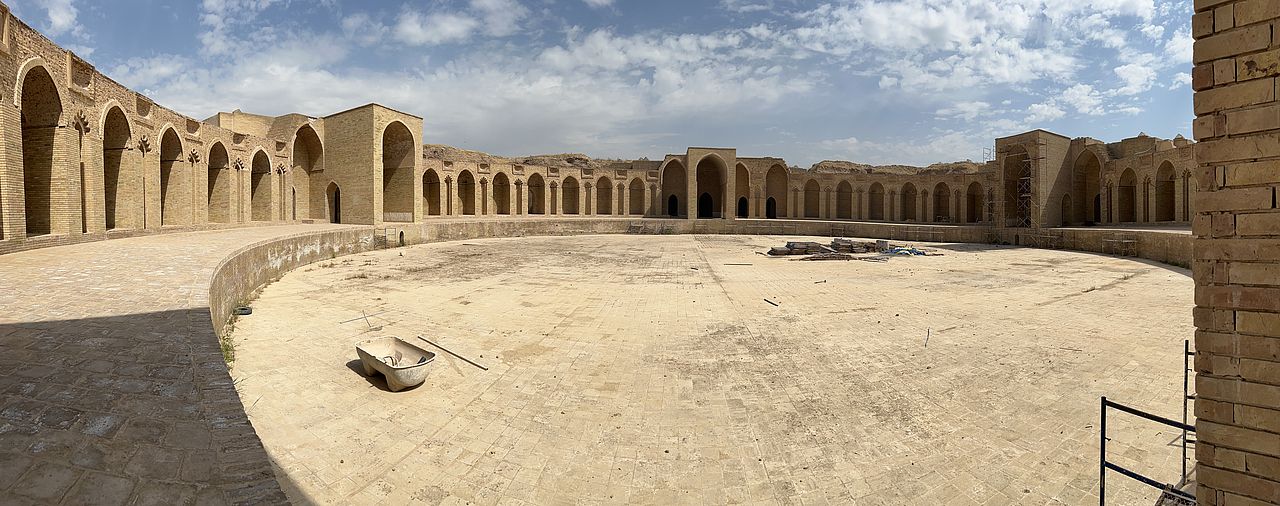
Das universitäre Forschungsnetzwerk «NOMAD – Naher Osten, Mesopotamien, Ägypten im Diskurs» vernetzt Forschungen zum östlichen Mittelmeerraum, Mesopotamien und Ägypten an der Universität Basel und fördert den Austausch mit der Öffentlichkeit. Im westasiatischen Raum (ca. 10. Jt.v.u.Z. bis 7.Jh.u.Z.) entstanden sesshafte Lebensweisen, Ackerbau, Viehzucht, urbanes Leben, Schriftsysteme, Industrien und Wissenschaften sowie die religiösen Traditionen von Judentum, Christentum und Islam. Ohne Berücksichtigung der Geschichte Westasiens lassen sich relevante Prozesse der Weltgeschichte nicht verstehen. Themen aus dem Bereich des Nahen Osten sind seit Jahrzehnten in Politik, Wirtschaft und Gesellschaft relevant, national und international omnipräsent und werden es weiterhin bleiben.

In der Region Basel setzen sich zahlreiche Forschende und Institutionen mit Kulturen, Zeiten, Regionen, Religionen und Sprachen des Nahen Ostens, Mesopotamiens und Ägyptens auseinander. NOMAD hat zum Ziel, diese Kompetenzen und Angebote zu bündeln. NOMAD fördert den für Wissenschaft wie Öffentlichkeit wichtigen Austausch über kulturhistorische, aktuelle und fachübergreifende Themen zwischen (Nachwuchs-)Forschenden, Studierenden und der breiteren Öffentlichkeit.

Am Forschungsnetzwerk beteiligt sind Forschende der Theologischen Fakultät, des Departements Altertumswissenschaften, der Nahoststudien, des Zentrums für Jüdische Studien und der Integrativen Prähistorischen und Naturwissenschaftlichen Archäologie (IPNA) der Universität Basel sowie das Antikenmuseum Basel.


The university research network «NOMAD – Near East, Mesopotamia, Egypt in Discourse» connects research at the University of Basel focused on the Eastern Mediterranean, Mesopotamia, and Egypt, and promotes dialogue with the public. In West Asia (approx. 10th millennium BCE to 7th century CE), key developments emerged, including settled ways of life, agriculture, animal husbandry, urbanization, writing systems, industries and sciences, as well as the religious traditions of Judaism, Christianity, and Islam. Understanding major processes in world history is impossible without considering the history of West Asia. Topics related to the Near East have long played a crucial role in politics, economics, and society – both nationally and internationally – and will continue to do so.

In the Basel region, numerous researchers and institutions engage with the cultures, periods, regions, religions, and languages of the Near East, Mesopotamia, and Egypt. NOMAD aims to bring together these areas of expertise and offerings. The network fosters interdisciplinary exchange on cultural-historical, contemporary, and academic topics among (early-career) researchers, students, and the wider public – an exchange essential to both scholarship and society.

The research network includes researchers from the Faculty of Theology, the Department of Ancient Civilizations, Near and Middle Eastern Studies, the Center for Jewish Studies, the Integrative Prehistory and Archaeological Science (IPAS) at the University of Basel, and the Antikenmuseum Basel.