UNIverse - Public Research Portal
FEMALE avatar

Dr. Ricarda Scholz-Kuhn

Institute for Educational Sciences
Profiles & Affiliations

Projects & Collaborations

3 found
Show per page
Project cover

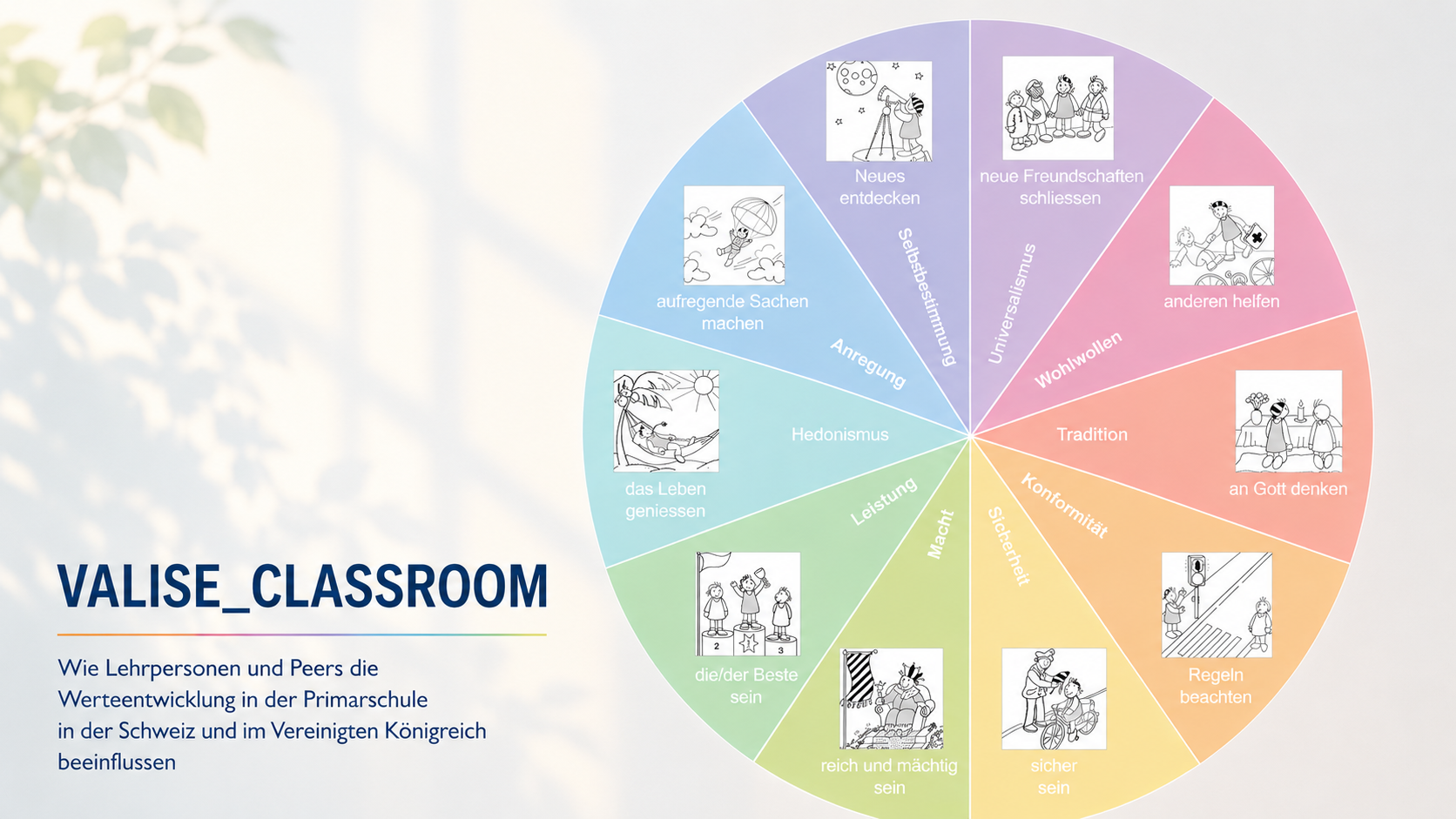
How do values take shape in classrooms? A mixed-methods study of teacher and peer influences on children’s value formation in primary schools in Switzerland and the UK

Research Project  | 4 Project Members

The project investigates how teachers and peers may shape the development of values among primary school children in Switzerland and the United Kingdom. Its aim is to disentangle the dynamic effects within the classroom in order to establish a robust foundation for fostering value-related competencies in early schooling.

Although values are firmly embedded in curricula such as Switzerland’s Lehrplan 21 and the UK’s OFSTED educational standards, there is a lack of knowledge about how the social fabric of the classroom influences children’s value development. This project addresses this gap by focusing not only on children themselves, but explicitly on the potential influences of teachers and peers. Through a longitudinal study involving approximately 1,000 children in Switzerland, as well as qualitative interviews with teachers in both countries (Switzerland and the United Kingdom), the project pursues two main objectives: 1) to analyse the developmental trajectories of values and behaviour during the first two years of primary school, and 2) to identify the mechanisms through which pedagogical practices and social dynamics may shape children’s values. For the first time, the study examines how these factors interact, rather than considering them in isolation.

Building on the findings of the preceding VALISE research project (VALues In School Education), the present study (VALISE_CLASSROOM) focuses on processes of value formation within the classroom. The results are intended to support teachers and school leaders in shaping the classroom as an effective environment for children’s social and moral development. This is of high societal relevance, as reflective value formation constitutes a foundation for identity, behaviour, and social cohesion.

Project number: 10007914

Project cover

Werte in Aktion

Research Project  | 3 Project Members

The Agora project, titled “VALUES in Action: Empowering Swiss Teachers Through Evidence-Based Values Education,” builds on findings from the SNSF-funded research project VALISE (2020-2024). The VALISE research project explored the development of values among primary school children in Switzerland and the United Kingdom. The AGORA project “VALUES in Action” aims to communicate the most important findings from research on value development in primary schools to practitioners, and in doing so promote values education in Swiss primary schools. Led by the Institute for Educational Sciences at the University of Basel, the project addresses a crucial gap between abstract research on values and their practical application in classrooms. It recognizes values as guiding principles, which relate to perceptions, attitudes, and behaviors.

Despite international recognition of the importance of values education, many teachers face challenges in implementing it effectively. The project aims to empower educators by developing an interactive, research-driven digital platform with three key objectives:

  1. Self-Reflection: Tools that help teachers examine their values and how they relate to classroom interactions.
  2. Knowledge Enhancement: Comprehensive resources, including expert videos, to deepen understanding of values and their role in education.
  3. Practical Solutions: A toolkit of age-appropriate activities, which encourage meaningful dialogue between students and teachers.

A distinctive feature of the project is its collaborative approach, involving primary school teachers from the outset to ensure the platform meets their needs. The co-creation process fosters practical relevance and usability.

The project is supported by an interdisciplinary team, including value education specialists and communication experts. Partners such as éducation21 help disseminate the platform and align it with national educational goals. The platform also incorporates inclusive practices to promote diversity and equity, equipping teachers with tools to foster respectful, empathetic, and culturally competent learning environments.

The project aims to make a meaningful impact by boosting teachers' skills, fostering greater pupil engagement with democratic principles, and building stronger, more cohesive school communities. By integrating values education into Swiss primary schools, it seeks to nurture future generations to be empathetic, inclusive, and socially responsible.

Project cover

The Formation of Children's Values in School: A Study on Value Development Among Primary School Children in Switzerland and the United Kingdom

Research Project  | 3 Project Members

This project will illuminate how primary schools shape children's personal value development, by employing a longitudinal design in Switzerland along with a comparative cross-sectional study in the UK. The project builds on our experience and successful joint projects in classroom research and human value development. The project will set the foundations for theory building on formation of values in the school context. This knowledge is essential for providing evidence-based guidance for values education in schools. The formation of children's values in primary school is at the core of school curricula and educational frameworks in Europe, and more specifically in Switzerland (Lehrplan 21) and the UK (Department of Education, 2014). Values express broad goals (kindness, curiosity) that are important to a person in life, and they are linked to behaviour. Primary schools are expected to develop children's understanding of their own and others' values, children's ability to express their own values and pursue behaviours that help achieving them. In most recent years there has been a steep increase of publications, including the first special section on value development from childhood to early adulthood and research which highlights the impact of the family context and value-based educational goals on children's value development. However, the field is still surprisingly under-researched, and there is a lack of evidence of how children's values develop and how they are formed in primary school. The proposed four-year collaborative project (Switzerland and UK) will help fill this research gap. The findings from this project will be published in leading international journals with a focus on open science. The findings will be publicised worldwide through networks and values research centres, and disseminated widely to teachers, school principals, politicians, and the wider public.