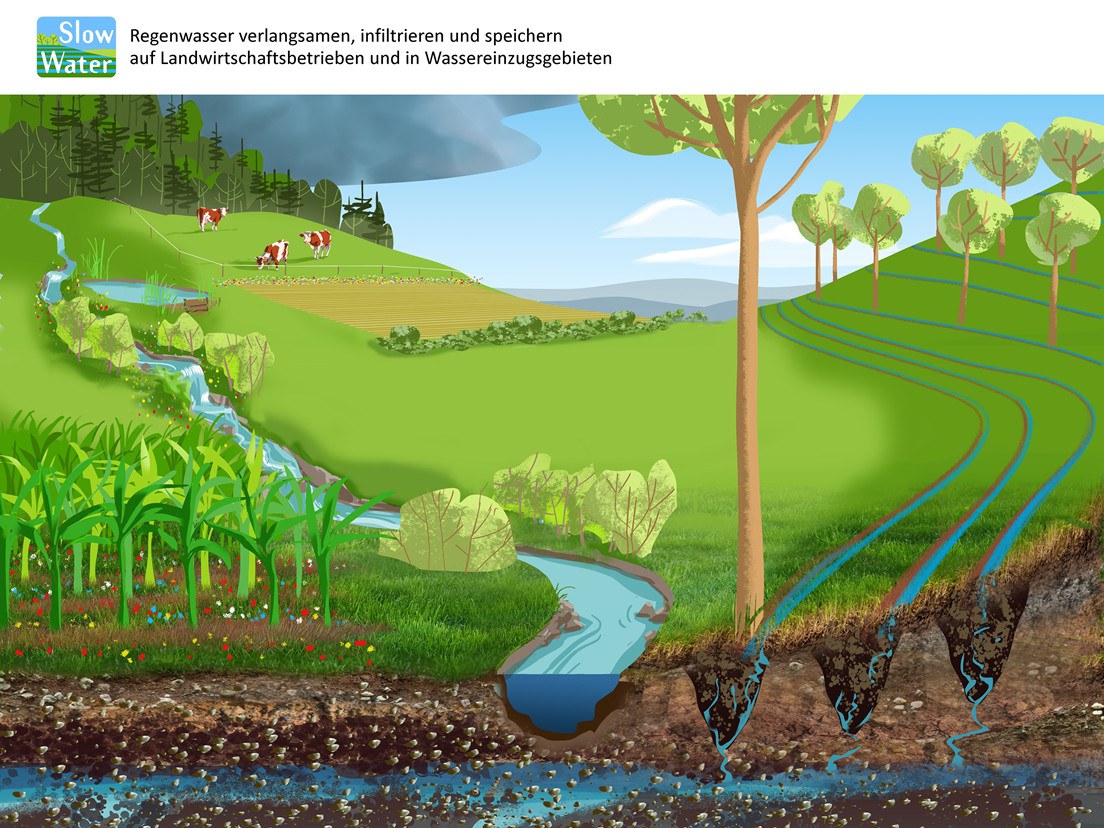
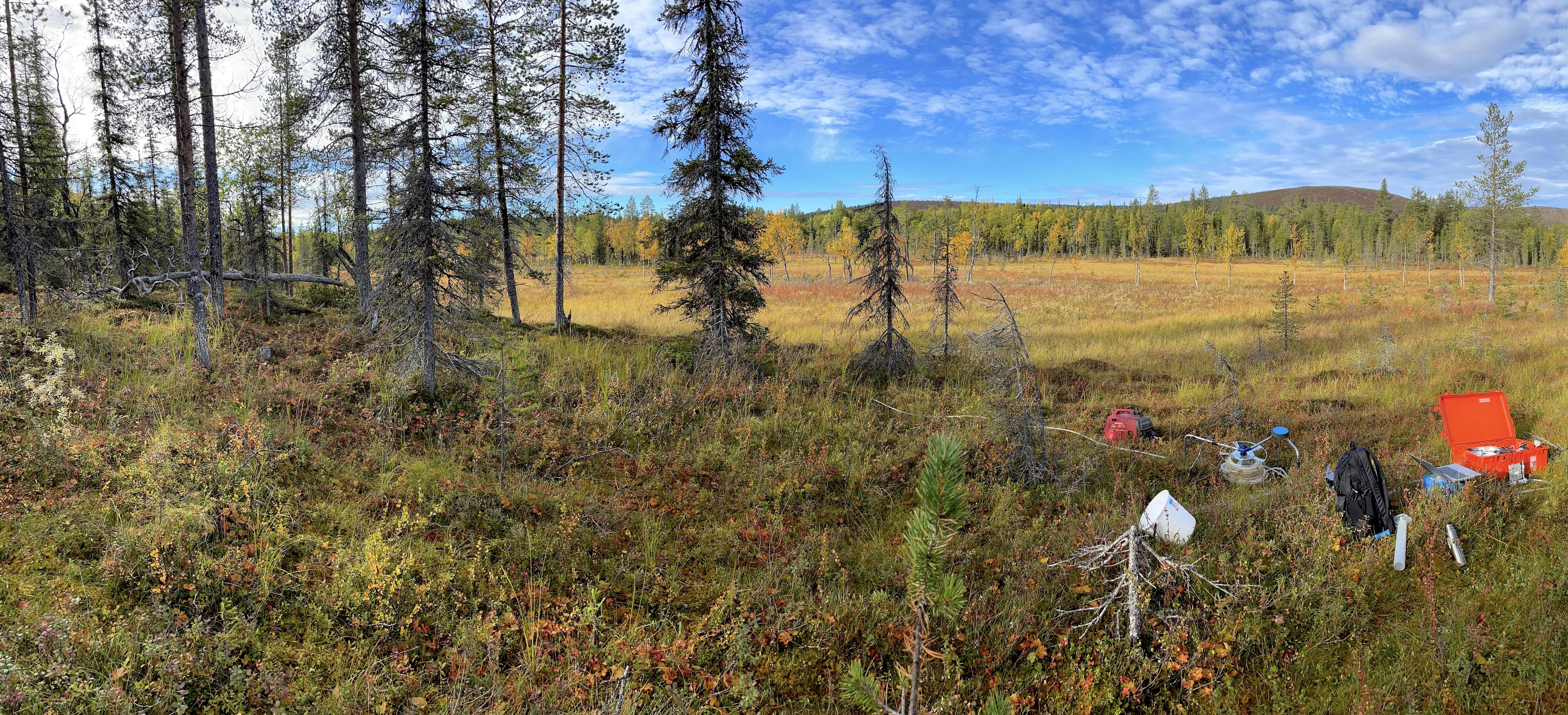
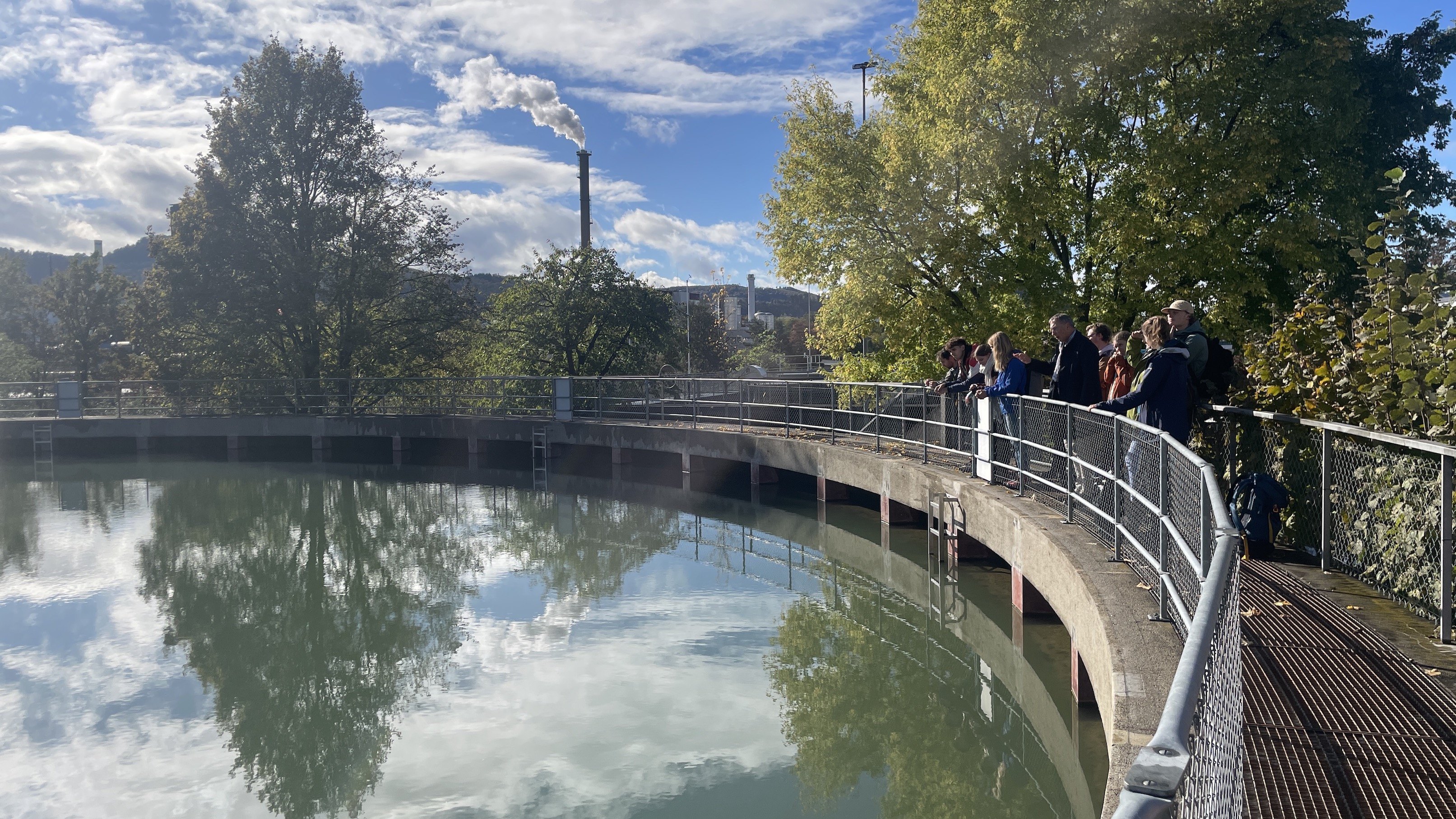
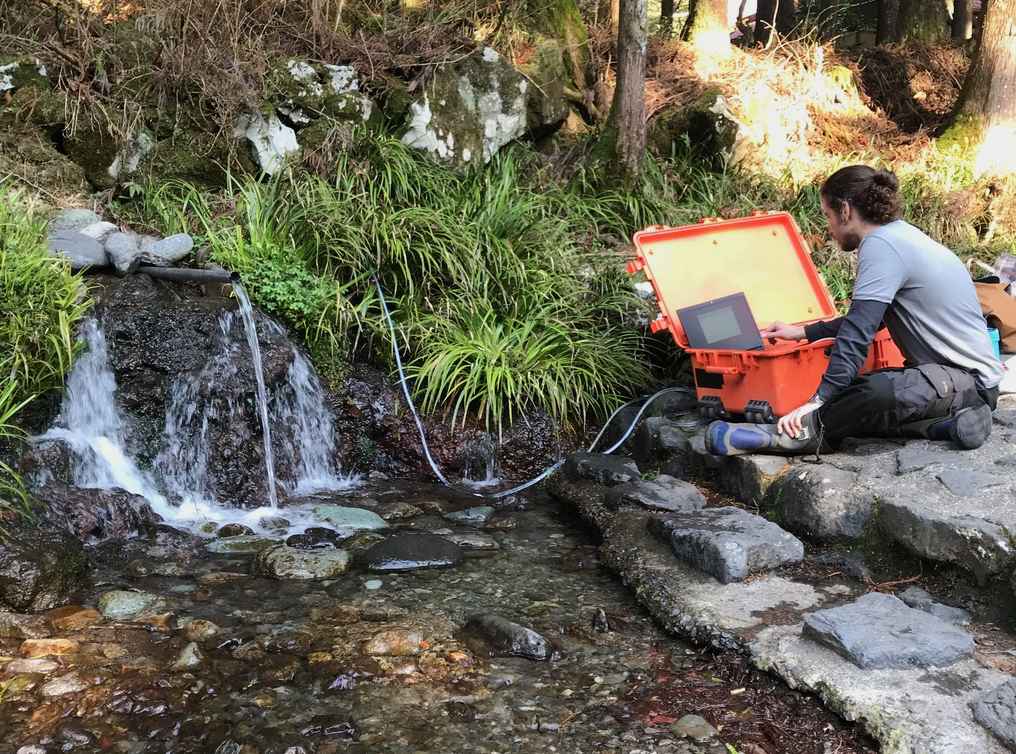
My research aims at improving our understanding of surface water-groundwater interactions in diverse environments. I'm particularly interested in the development and application of novel tracer methods for this purpose and integration of these data into fully coupled surface water-groundwater model calibration. We're currently working on the implementation of multiple in situ online tracer monitoring techniques (e.g., for noble gases and microbes) and data assimilation procedures.
Follow this link for further information
Selected Publications
Musy, Stephanie L., Dresmann, Horst, Tomonaga, Yama, Sano, Yuji, & (2025). Modeling a geologically complex volcanic watershed for integrated water resources management in Mt. Fuji, Japan [Journal-article]. Scientific Data. https://doi.org/10.1038/s41597-025-06380-z
Musy, Stephanie L., Dresmann, Horst, Tomonaga, Yama, Sano, Yuji, & (2025). Modeling a geologically complex volcanic watershed for integrated water resources management in Mt. Fuji, Japan [Journal-article]. Scientific Data. https://doi.org/10.1038/s41597-025-06380-z
Currle, Friederike, Therrien, René, & (2025). Explicit simulation of microbial transport with a dual-permeability, two-site kinetic deposition formulation using the integrated surface–subsurface hydrological model HydroGeoSphere. Hydrology and Earth System Sciences, 29(20), 5383–5403. https://doi.org/10.5194/hess-29-5383-2025
Currle, Friederike, Therrien, René, & (2025). Explicit simulation of microbial transport with a dual-permeability, two-site kinetic deposition formulation using the integrated surface–subsurface hydrological model HydroGeoSphere. Hydrology and Earth System Sciences, 29(20), 5383–5403. https://doi.org/10.5194/hess-29-5383-2025
van Tiel, Marit, Aubry-Wake, Caroline, Somers, Lauren, Andermann, Christoff, Avanzi, Francesco, Baraer, Michel, Chiogna, Gabriele, Daigre, Clémence, Das, Soumik, Drenkhan, Fabian, Farinotti, Daniel, Fyffe, Catriona L., de Graaf, Inge, Hanus, Sarah, Immerzeel, Walter, Koch, Franziska, McKenzie, Jeffrey M., Müller, Tom, Popp, Andrea L., et al. (2024). Cryosphere–groundwater connectivity is a missing link in the mountain water cycle [Journal-article]. Nature Water, 2, 624–637. https://doi.org/10.1038/s44221-024-00277-8
van Tiel, Marit, Aubry-Wake, Caroline, Somers, Lauren, Andermann, Christoff, Avanzi, Francesco, Baraer, Michel, Chiogna, Gabriele, Daigre, Clémence, Das, Soumik, Drenkhan, Fabian, Farinotti, Daniel, Fyffe, Catriona L., de Graaf, Inge, Hanus, Sarah, Immerzeel, Walter, Koch, Franziska, McKenzie, Jeffrey M., Müller, Tom, Popp, Andrea L., et al. (2024). Cryosphere–groundwater connectivity is a missing link in the mountain water cycle [Journal-article]. Nature Water, 2, 624–637. https://doi.org/10.1038/s44221-024-00277-8
Epting, Jannis, Raman Vinna, Carl Love, Affolter, Annette, Scheidler, Stefan, & (2023). Climate change adaptation and mitigation measures for alluvial aquifers - Solution approaches based on the thermal exploitation of managed aquifer (MAR) and surface water recharge (MSWR). Water Research, 238, 119988. https://doi.org/10.1016/j.watres.2023.119988
Epting, Jannis, Raman Vinna, Carl Love, Affolter, Annette, Scheidler, Stefan, & (2023). Climate change adaptation and mitigation measures for alluvial aquifers - Solution approaches based on the thermal exploitation of managed aquifer (MAR) and surface water recharge (MSWR). Water Research, 238, 119988. https://doi.org/10.1016/j.watres.2023.119988
, Nagaosa, K., Schilling, T. U., Brennwald, M. S., Sohrin, R., Tomonaga, Y., Kipfer, R., Brunner, P., & Kato, K. (2023). Revisiting Mt. Fuji’s groundwater origins with helium, vanadium and eDNA tracers. Nature Water, 1, 60–73. https://doi.org/10.1038/s44221-022-00001-4
, Nagaosa, K., Schilling, T. U., Brennwald, M. S., Sohrin, R., Tomonaga, Y., Kipfer, R., Brunner, P., & Kato, K. (2023). Revisiting Mt. Fuji’s groundwater origins with helium, vanadium and eDNA tracers. Nature Water, 1, 60–73. https://doi.org/10.1038/s44221-022-00001-4