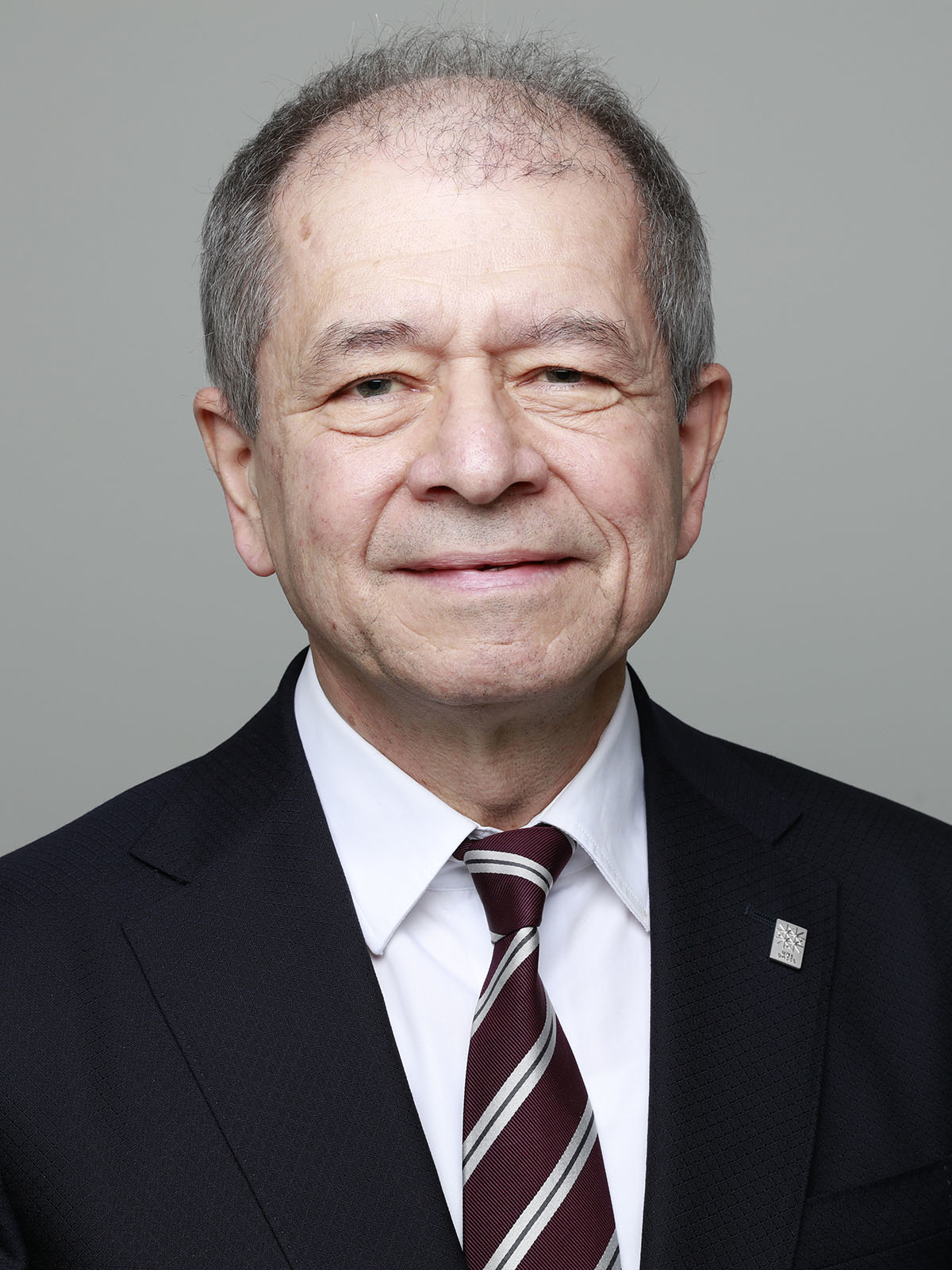
Prof. em. Dr. Antonio Loprieno Faculty of Business and Economics Profiles & Affiliations OverviewResearch Publications Projects & Collaborations Projects & Collaborations OverviewResearch Publications Projects & Collaborations Profiles & Affiliations Projects & Collaborations 9 foundShow per page10 10 20 50 Crossing Boundaries: Understanding Complex Scribal Practices in Ancient Egypt Research Project | 6 Project MembersMany aspects of ancient Egyptian scribal culture are still poorly understood. Within the project, we adopt a transdisciplinary approach in order to cross the boundaries between archaeological and philological scholarship and better understand the so-called 'heterogeneous' papyri which bear several texts and drawings belonging to various genres, e.g., maps, plans, accounts, poems, hymns and letters and have never been studied as a coherent whole. They are, however, of primary importance for the study of the wide competence and the performance of ancient scribes at work, both synchronically and diachronically. The papyri stem from the village of Deir el-Medina , a literate community which housed the families of the workmen who built the royal tombs in the Valley of the Kings and the surrounding necropolis during the New Kingdom (c. 1350-1000 BCE). The project partners are the University of Basel (Switzerland), the Université de Liège (Belgium) and the Museo Egizio (Turin, Italy), where the most important collection of papyri from this site is kept. The project aims to identify the fragments of heterogeneous papyri from this collection, to piece the fragments together and provide a digital reconstruction of the original documents, to study the variety of texts attested on each papyrus, to assess the numbers of scribal hands and reconstruct the history of these documents, to enrich the results with data coming from other ancient Egyptian archives of heterogeneous papyri, and to broaden the perspective by comparing the data from Deir el-Medina with complex scribal practices from other periods and places. We expect our project to exert a major impact on three main levels: from a cultural heritage point of view, it will lead to the reconstruction of number of ancient Egyptian papyri, now in fragmentary state; (2) from a Digital Humanities point of view, new learning algorithms and a dedicated interface will be developed to piece together hundreds of fragments of papyri; (3) from a cultural history point of view, we aim at significant new insights about Egyptian scribal culture, demonstrating that many textual categories (administrative, legal, historical, religious, or literary) could appear on a single document and mastered by individual scribes. Crossing Boundaries: Understanding Complex Scribal Practices in Ancient Egypt Research Project | 1 Project MembersImported from Grants Tool 4428956 FV-64 Die Ökonomie der Digitalisierung in der universitären Lehre Research Project | 1 Project MembersNo Description available Dissertation Anika Kolster: Mythos oder Wissenschaft? Die Konstruktion des Ägyptenbildes und des Ausstellungswesens. Research Project | 3 Project MembersMythos oder Wissenschaft? Die Konstruktion des Ägyptenbildes und des Ausstellungswesens Das Projekt verfolgt das Ziel, die Entwicklung der Ägyptenausstellung seit ihrer Entstehung im 19. Jahrhundert bis zu aktuellen, kontemporären Ausstellungen und Events zum antiken Ägypten zu untersuchen. Untersuchungsgegenstand sind temporäre Sonderausstellungen und auch Wanderausstellungen, die beide auf Grund ihrer Ausstellungsdauer von wenigen Monaten ganz eigenen Darstellungskriterien unterliegen. Untersucht werden soll das Spannungsverhältnis zwischen Forschungsgeschichte, Rezeptionsgeschichte und Ausstellung innerhalb der Ägyptologie bzw. der populären Ägyptenrezeption. Es wird analysiert werden, welche Ägyptenbilder von Ausstellungen konstruiert werden und wie sie diese Ägyptenbilder erzeugen und warum. Das Projekt befasst sich in einem ersten, historisch-kritischen Teil, mit der historischen Entwicklung der ägyptischen Ausstellung seit ihren Anfängen im 19. Jahrhundert bis in die Gegenwart und in diesem Zusammenhang auch mit der Entwicklung der Ägyptologie und dem Zeitgeist der jeweiligen Epochen. Integriert in die historische Bestandsaufnahme der ägyptischen Ausstellungen wird die kritische Analyse ausgewählter Ausstellungsbeispiele sowie der Ausstellungskataloge. Die Konzeption, Konstruktion und Inszenierung der Ausstellungen wird analysiert. Die historisch-kritische Untersuchung soll es ermöglichen, Konzepte, Veränderungen, Neuerungen, Tendenzen sowie die konstruierten Ägyptenbilder der Ägyptenausstellungen erkennen zu können und soll es erlauben, in einer zweiten, systematischen Analyse zu untersuchen, welche Typen von Ägyptenausstellungen zu unterscheiden sind und welche dieser Typen heute aktuell sind. Außerdem wird untersucht, wie diese kontemporären Ägyptenausstellungen inszeniert werden, was sich im Gegensatz zu ihren historischen Vorgängern verändert hat, was gleich geblieben ist und wie Konzepte und eventuelle Grundsätze für heutige Ägyptenausstellungen lauten könnten, die sowohl die Bedürfnisse der Besucher berücksichtigen, als auch jene der Ägyptologie sowie die ökonomischen Interessen der Ausstellungsmacher. Diese Analyse soll konstruktiv sein und vor allem Grenzen und Möglichkeiten der Ägyptenausstellungen aufzeigen. Dissertationsprojekt Noémi Villars: L'offrande de l'il-oudjat dans les temples gréco-romains d'époque ptolémaïque Research Project | 3 Project MembersDissertation Project of Noémi Villars: On the walls of Ptolemaic temples, offering scenes show the king standing in front of a god or goddess. Captions indicate the purpose, the recipient and the role of the offering. Each type of offering has its own meaning and importance, as well as a specific purpose. The offering of the Udjat-eye is an important symbol in Ancient Egypt: it represents unity, health and integrity, and is used as magical-medicinal object. It is the subject of 177 offering scenes in the temples of Ptolemaic Egypt, and therefore its analysis and understanding crucial. Through the analysis of texts and representations in their contexts, we will better understand what exactly the offering represents and will comprehend its role in the temples of Ptolemaic Egypt in relation to the other offerings. This will lead to a better awareness of the whole process of temple decoration and late Egyptian religion. Dissertation Daniel Arpagaus: Zeichen, die die Welt bedeuten Research Project | 3 Project MembersDissertation project of Daniel Arpagaus The dissertation aims at investigating Ptolemaic period hieroglyphic writings - mainly from the Edfu and Dendera temples - that convey a surplus of meaning via the spelling of individual words. While research so far referred to such writings mainly under the label of ‹cryptography›, a current approach has not only coined the new term ‹visual poetry› (Ludwig D. Morenz), but focuses on the strategies of ‹Schriftbildlichkeit› that are involved. As hieroglyps formed a pictoral script from the outset, this is all the more true for Ptolemaic with its thousands of newly developed signs and sign variants. Thus, the vast text corpora of Edfu and Dendera provide an ideal field for investigation. Project of the NCCR Iconic Criticism: The Image of Writing Research Project | 1 Project MembersIn representing phonetic substance along with meaningful units of language (e.g. words), complex writing systems such as the Egyptian, Chinese or Luwian, display a peculiar type of plasticity and semiotic density, which can be enhanced even further by the visual shapes of graphs. Yet, even in cases where the iconic aspects are foregrounded by script users, for instance for purposes of artful or ludic writing, iconicity remains indelibly intertwined with language. The module sets out to focus upon the manifold tensions between readability and representations of language, as well as the increase or reduction of readability along different dimensions and degrees of iconicity. Properties and modes of graphic motivation, e.g. in the case of system-internal secondary motivation, will be captured by a dynamic approach. The materiality and (in-)visibility of writing forms another topic to be pursued in close cooperation with the eikones module "Revealing and Concealing". Diachronic Grammar of Egyptian and Coptic Research Project | 3 Project MembersFor a long time a "Diachronic Grammar of Egyptian and Coptic" is a desideratum of Egyptology. The wealth of texts and of accessable philological as well as linguistic interpretations enable a detailed diachronic description of the Egyptian and Coptic language. The project aims to amend that situation. Intended as reference grammar for philologist and as innovative contribution for the linguistic analysis of Egyptian and Coptic the outcome of the project aims at a great variety of experts. These will be egyptologist, demoticists, and coptologists on the one hand and linguists on the other hand. The grammer intends to replace existing synchronic grammars of various stages of Egyptian and Coptic in establishing itself as a reference tool for all aspects of Egyptian and Coptic. MISR Mission Siptah-Ramses X. Research Project | 6 Project Members1998 - 2008 Kings' Valley, Luxor Egypt archaeological research and epigraphical documentation of KV 18 (Ramses X), KV 47 (Siptah), KV 32 (Queen Tiaa) as well as in the area of the workmen's huts. Reconstitution of original decoration of parts of KV 17 (Sethos I). 1 1 OverviewResearch Publications Projects & Collaborations
Projects & Collaborations 9 foundShow per page10 10 20 50 Crossing Boundaries: Understanding Complex Scribal Practices in Ancient Egypt Research Project | 6 Project MembersMany aspects of ancient Egyptian scribal culture are still poorly understood. Within the project, we adopt a transdisciplinary approach in order to cross the boundaries between archaeological and philological scholarship and better understand the so-called 'heterogeneous' papyri which bear several texts and drawings belonging to various genres, e.g., maps, plans, accounts, poems, hymns and letters and have never been studied as a coherent whole. They are, however, of primary importance for the study of the wide competence and the performance of ancient scribes at work, both synchronically and diachronically. The papyri stem from the village of Deir el-Medina , a literate community which housed the families of the workmen who built the royal tombs in the Valley of the Kings and the surrounding necropolis during the New Kingdom (c. 1350-1000 BCE). The project partners are the University of Basel (Switzerland), the Université de Liège (Belgium) and the Museo Egizio (Turin, Italy), where the most important collection of papyri from this site is kept. The project aims to identify the fragments of heterogeneous papyri from this collection, to piece the fragments together and provide a digital reconstruction of the original documents, to study the variety of texts attested on each papyrus, to assess the numbers of scribal hands and reconstruct the history of these documents, to enrich the results with data coming from other ancient Egyptian archives of heterogeneous papyri, and to broaden the perspective by comparing the data from Deir el-Medina with complex scribal practices from other periods and places. We expect our project to exert a major impact on three main levels: from a cultural heritage point of view, it will lead to the reconstruction of number of ancient Egyptian papyri, now in fragmentary state; (2) from a Digital Humanities point of view, new learning algorithms and a dedicated interface will be developed to piece together hundreds of fragments of papyri; (3) from a cultural history point of view, we aim at significant new insights about Egyptian scribal culture, demonstrating that many textual categories (administrative, legal, historical, religious, or literary) could appear on a single document and mastered by individual scribes. Crossing Boundaries: Understanding Complex Scribal Practices in Ancient Egypt Research Project | 1 Project MembersImported from Grants Tool 4428956 FV-64 Die Ökonomie der Digitalisierung in der universitären Lehre Research Project | 1 Project MembersNo Description available Dissertation Anika Kolster: Mythos oder Wissenschaft? Die Konstruktion des Ägyptenbildes und des Ausstellungswesens. Research Project | 3 Project MembersMythos oder Wissenschaft? Die Konstruktion des Ägyptenbildes und des Ausstellungswesens Das Projekt verfolgt das Ziel, die Entwicklung der Ägyptenausstellung seit ihrer Entstehung im 19. Jahrhundert bis zu aktuellen, kontemporären Ausstellungen und Events zum antiken Ägypten zu untersuchen. Untersuchungsgegenstand sind temporäre Sonderausstellungen und auch Wanderausstellungen, die beide auf Grund ihrer Ausstellungsdauer von wenigen Monaten ganz eigenen Darstellungskriterien unterliegen. Untersucht werden soll das Spannungsverhältnis zwischen Forschungsgeschichte, Rezeptionsgeschichte und Ausstellung innerhalb der Ägyptologie bzw. der populären Ägyptenrezeption. Es wird analysiert werden, welche Ägyptenbilder von Ausstellungen konstruiert werden und wie sie diese Ägyptenbilder erzeugen und warum. Das Projekt befasst sich in einem ersten, historisch-kritischen Teil, mit der historischen Entwicklung der ägyptischen Ausstellung seit ihren Anfängen im 19. Jahrhundert bis in die Gegenwart und in diesem Zusammenhang auch mit der Entwicklung der Ägyptologie und dem Zeitgeist der jeweiligen Epochen. Integriert in die historische Bestandsaufnahme der ägyptischen Ausstellungen wird die kritische Analyse ausgewählter Ausstellungsbeispiele sowie der Ausstellungskataloge. Die Konzeption, Konstruktion und Inszenierung der Ausstellungen wird analysiert. Die historisch-kritische Untersuchung soll es ermöglichen, Konzepte, Veränderungen, Neuerungen, Tendenzen sowie die konstruierten Ägyptenbilder der Ägyptenausstellungen erkennen zu können und soll es erlauben, in einer zweiten, systematischen Analyse zu untersuchen, welche Typen von Ägyptenausstellungen zu unterscheiden sind und welche dieser Typen heute aktuell sind. Außerdem wird untersucht, wie diese kontemporären Ägyptenausstellungen inszeniert werden, was sich im Gegensatz zu ihren historischen Vorgängern verändert hat, was gleich geblieben ist und wie Konzepte und eventuelle Grundsätze für heutige Ägyptenausstellungen lauten könnten, die sowohl die Bedürfnisse der Besucher berücksichtigen, als auch jene der Ägyptologie sowie die ökonomischen Interessen der Ausstellungsmacher. Diese Analyse soll konstruktiv sein und vor allem Grenzen und Möglichkeiten der Ägyptenausstellungen aufzeigen. Dissertationsprojekt Noémi Villars: L'offrande de l'il-oudjat dans les temples gréco-romains d'époque ptolémaïque Research Project | 3 Project MembersDissertation Project of Noémi Villars: On the walls of Ptolemaic temples, offering scenes show the king standing in front of a god or goddess. Captions indicate the purpose, the recipient and the role of the offering. Each type of offering has its own meaning and importance, as well as a specific purpose. The offering of the Udjat-eye is an important symbol in Ancient Egypt: it represents unity, health and integrity, and is used as magical-medicinal object. It is the subject of 177 offering scenes in the temples of Ptolemaic Egypt, and therefore its analysis and understanding crucial. Through the analysis of texts and representations in their contexts, we will better understand what exactly the offering represents and will comprehend its role in the temples of Ptolemaic Egypt in relation to the other offerings. This will lead to a better awareness of the whole process of temple decoration and late Egyptian religion. Dissertation Daniel Arpagaus: Zeichen, die die Welt bedeuten Research Project | 3 Project MembersDissertation project of Daniel Arpagaus The dissertation aims at investigating Ptolemaic period hieroglyphic writings - mainly from the Edfu and Dendera temples - that convey a surplus of meaning via the spelling of individual words. While research so far referred to such writings mainly under the label of ‹cryptography›, a current approach has not only coined the new term ‹visual poetry› (Ludwig D. Morenz), but focuses on the strategies of ‹Schriftbildlichkeit› that are involved. As hieroglyps formed a pictoral script from the outset, this is all the more true for Ptolemaic with its thousands of newly developed signs and sign variants. Thus, the vast text corpora of Edfu and Dendera provide an ideal field for investigation. Project of the NCCR Iconic Criticism: The Image of Writing Research Project | 1 Project MembersIn representing phonetic substance along with meaningful units of language (e.g. words), complex writing systems such as the Egyptian, Chinese or Luwian, display a peculiar type of plasticity and semiotic density, which can be enhanced even further by the visual shapes of graphs. Yet, even in cases where the iconic aspects are foregrounded by script users, for instance for purposes of artful or ludic writing, iconicity remains indelibly intertwined with language. The module sets out to focus upon the manifold tensions between readability and representations of language, as well as the increase or reduction of readability along different dimensions and degrees of iconicity. Properties and modes of graphic motivation, e.g. in the case of system-internal secondary motivation, will be captured by a dynamic approach. The materiality and (in-)visibility of writing forms another topic to be pursued in close cooperation with the eikones module "Revealing and Concealing". Diachronic Grammar of Egyptian and Coptic Research Project | 3 Project MembersFor a long time a "Diachronic Grammar of Egyptian and Coptic" is a desideratum of Egyptology. The wealth of texts and of accessable philological as well as linguistic interpretations enable a detailed diachronic description of the Egyptian and Coptic language. The project aims to amend that situation. Intended as reference grammar for philologist and as innovative contribution for the linguistic analysis of Egyptian and Coptic the outcome of the project aims at a great variety of experts. These will be egyptologist, demoticists, and coptologists on the one hand and linguists on the other hand. The grammer intends to replace existing synchronic grammars of various stages of Egyptian and Coptic in establishing itself as a reference tool for all aspects of Egyptian and Coptic. MISR Mission Siptah-Ramses X. Research Project | 6 Project Members1998 - 2008 Kings' Valley, Luxor Egypt archaeological research and epigraphical documentation of KV 18 (Ramses X), KV 47 (Siptah), KV 32 (Queen Tiaa) as well as in the area of the workmen's huts. Reconstitution of original decoration of parts of KV 17 (Sethos I). 1 1
Crossing Boundaries: Understanding Complex Scribal Practices in Ancient Egypt Research Project | 6 Project MembersMany aspects of ancient Egyptian scribal culture are still poorly understood. Within the project, we adopt a transdisciplinary approach in order to cross the boundaries between archaeological and philological scholarship and better understand the so-called 'heterogeneous' papyri which bear several texts and drawings belonging to various genres, e.g., maps, plans, accounts, poems, hymns and letters and have never been studied as a coherent whole. They are, however, of primary importance for the study of the wide competence and the performance of ancient scribes at work, both synchronically and diachronically. The papyri stem from the village of Deir el-Medina , a literate community which housed the families of the workmen who built the royal tombs in the Valley of the Kings and the surrounding necropolis during the New Kingdom (c. 1350-1000 BCE). The project partners are the University of Basel (Switzerland), the Université de Liège (Belgium) and the Museo Egizio (Turin, Italy), where the most important collection of papyri from this site is kept. The project aims to identify the fragments of heterogeneous papyri from this collection, to piece the fragments together and provide a digital reconstruction of the original documents, to study the variety of texts attested on each papyrus, to assess the numbers of scribal hands and reconstruct the history of these documents, to enrich the results with data coming from other ancient Egyptian archives of heterogeneous papyri, and to broaden the perspective by comparing the data from Deir el-Medina with complex scribal practices from other periods and places. We expect our project to exert a major impact on three main levels: from a cultural heritage point of view, it will lead to the reconstruction of number of ancient Egyptian papyri, now in fragmentary state; (2) from a Digital Humanities point of view, new learning algorithms and a dedicated interface will be developed to piece together hundreds of fragments of papyri; (3) from a cultural history point of view, we aim at significant new insights about Egyptian scribal culture, demonstrating that many textual categories (administrative, legal, historical, religious, or literary) could appear on a single document and mastered by individual scribes.
Crossing Boundaries: Understanding Complex Scribal Practices in Ancient Egypt Research Project | 1 Project MembersImported from Grants Tool 4428956
FV-64 Die Ökonomie der Digitalisierung in der universitären Lehre Research Project | 1 Project MembersNo Description available
Dissertation Anika Kolster: Mythos oder Wissenschaft? Die Konstruktion des Ägyptenbildes und des Ausstellungswesens. Research Project | 3 Project MembersMythos oder Wissenschaft? Die Konstruktion des Ägyptenbildes und des Ausstellungswesens Das Projekt verfolgt das Ziel, die Entwicklung der Ägyptenausstellung seit ihrer Entstehung im 19. Jahrhundert bis zu aktuellen, kontemporären Ausstellungen und Events zum antiken Ägypten zu untersuchen. Untersuchungsgegenstand sind temporäre Sonderausstellungen und auch Wanderausstellungen, die beide auf Grund ihrer Ausstellungsdauer von wenigen Monaten ganz eigenen Darstellungskriterien unterliegen. Untersucht werden soll das Spannungsverhältnis zwischen Forschungsgeschichte, Rezeptionsgeschichte und Ausstellung innerhalb der Ägyptologie bzw. der populären Ägyptenrezeption. Es wird analysiert werden, welche Ägyptenbilder von Ausstellungen konstruiert werden und wie sie diese Ägyptenbilder erzeugen und warum. Das Projekt befasst sich in einem ersten, historisch-kritischen Teil, mit der historischen Entwicklung der ägyptischen Ausstellung seit ihren Anfängen im 19. Jahrhundert bis in die Gegenwart und in diesem Zusammenhang auch mit der Entwicklung der Ägyptologie und dem Zeitgeist der jeweiligen Epochen. Integriert in die historische Bestandsaufnahme der ägyptischen Ausstellungen wird die kritische Analyse ausgewählter Ausstellungsbeispiele sowie der Ausstellungskataloge. Die Konzeption, Konstruktion und Inszenierung der Ausstellungen wird analysiert. Die historisch-kritische Untersuchung soll es ermöglichen, Konzepte, Veränderungen, Neuerungen, Tendenzen sowie die konstruierten Ägyptenbilder der Ägyptenausstellungen erkennen zu können und soll es erlauben, in einer zweiten, systematischen Analyse zu untersuchen, welche Typen von Ägyptenausstellungen zu unterscheiden sind und welche dieser Typen heute aktuell sind. Außerdem wird untersucht, wie diese kontemporären Ägyptenausstellungen inszeniert werden, was sich im Gegensatz zu ihren historischen Vorgängern verändert hat, was gleich geblieben ist und wie Konzepte und eventuelle Grundsätze für heutige Ägyptenausstellungen lauten könnten, die sowohl die Bedürfnisse der Besucher berücksichtigen, als auch jene der Ägyptologie sowie die ökonomischen Interessen der Ausstellungsmacher. Diese Analyse soll konstruktiv sein und vor allem Grenzen und Möglichkeiten der Ägyptenausstellungen aufzeigen.
Dissertationsprojekt Noémi Villars: L'offrande de l'il-oudjat dans les temples gréco-romains d'époque ptolémaïque Research Project | 3 Project MembersDissertation Project of Noémi Villars: On the walls of Ptolemaic temples, offering scenes show the king standing in front of a god or goddess. Captions indicate the purpose, the recipient and the role of the offering. Each type of offering has its own meaning and importance, as well as a specific purpose. The offering of the Udjat-eye is an important symbol in Ancient Egypt: it represents unity, health and integrity, and is used as magical-medicinal object. It is the subject of 177 offering scenes in the temples of Ptolemaic Egypt, and therefore its analysis and understanding crucial. Through the analysis of texts and representations in their contexts, we will better understand what exactly the offering represents and will comprehend its role in the temples of Ptolemaic Egypt in relation to the other offerings. This will lead to a better awareness of the whole process of temple decoration and late Egyptian religion.
Dissertation Daniel Arpagaus: Zeichen, die die Welt bedeuten Research Project | 3 Project MembersDissertation project of Daniel Arpagaus The dissertation aims at investigating Ptolemaic period hieroglyphic writings - mainly from the Edfu and Dendera temples - that convey a surplus of meaning via the spelling of individual words. While research so far referred to such writings mainly under the label of ‹cryptography›, a current approach has not only coined the new term ‹visual poetry› (Ludwig D. Morenz), but focuses on the strategies of ‹Schriftbildlichkeit› that are involved. As hieroglyps formed a pictoral script from the outset, this is all the more true for Ptolemaic with its thousands of newly developed signs and sign variants. Thus, the vast text corpora of Edfu and Dendera provide an ideal field for investigation.
Project of the NCCR Iconic Criticism: The Image of Writing Research Project | 1 Project MembersIn representing phonetic substance along with meaningful units of language (e.g. words), complex writing systems such as the Egyptian, Chinese or Luwian, display a peculiar type of plasticity and semiotic density, which can be enhanced even further by the visual shapes of graphs. Yet, even in cases where the iconic aspects are foregrounded by script users, for instance for purposes of artful or ludic writing, iconicity remains indelibly intertwined with language. The module sets out to focus upon the manifold tensions between readability and representations of language, as well as the increase or reduction of readability along different dimensions and degrees of iconicity. Properties and modes of graphic motivation, e.g. in the case of system-internal secondary motivation, will be captured by a dynamic approach. The materiality and (in-)visibility of writing forms another topic to be pursued in close cooperation with the eikones module "Revealing and Concealing".
Diachronic Grammar of Egyptian and Coptic Research Project | 3 Project MembersFor a long time a "Diachronic Grammar of Egyptian and Coptic" is a desideratum of Egyptology. The wealth of texts and of accessable philological as well as linguistic interpretations enable a detailed diachronic description of the Egyptian and Coptic language. The project aims to amend that situation. Intended as reference grammar for philologist and as innovative contribution for the linguistic analysis of Egyptian and Coptic the outcome of the project aims at a great variety of experts. These will be egyptologist, demoticists, and coptologists on the one hand and linguists on the other hand. The grammer intends to replace existing synchronic grammars of various stages of Egyptian and Coptic in establishing itself as a reference tool for all aspects of Egyptian and Coptic.
MISR Mission Siptah-Ramses X. Research Project | 6 Project Members1998 - 2008 Kings' Valley, Luxor Egypt archaeological research and epigraphical documentation of KV 18 (Ramses X), KV 47 (Siptah), KV 32 (Queen Tiaa) as well as in the area of the workmen's huts. Reconstitution of original decoration of parts of KV 17 (Sethos I).