Faculty of Humanities and Social Sciences
UNIverse - Public Research Portal

Digital Humanities

Projects & Collaborations

6 found
Show per page
Project cover

GraphAfghanica: Building a Federated Knowledge Infrastructure for Afghan Historical Images

Research Project  | 2 Project Members

GraphAfghanica aims to develop a federated digital humanities infrastructure for the study of historical photographs of Afghanistan from the 1970s, a decade marked by profound social and political transformation. Afghan visual heritage from this period is widely dispersed across international institutions, private collections, and local archives, where it remains unevenly described, difficult to access, and rarely studied in a connected manner. Focusing initially on two major collections, the Bibliotheca Afghanica (BA) at the University Library of Basel and the EWA-76 ethnographic collection preserved in the Józef Burszta Digital archive in Poland, the project addresses this fragmentation by interlinking distributed photographic holdings through a provenance-aware

knowledge graph (KG). Rather than centralizing data, GraphAfghanica enables cross-collection exploration while preserving institutional custodianship and data sovereignty. A dedicated web-based application will provide scholars and the public with integrated access to images, metadata, and relationships across repositories, supporting chronological, spatial, and thematic inquiry into Afghanistan’s visual history.


Methodologically, the project integrates knowledge representation with interpretable computer vision and controlled multilingual description generation within a transparent, provenance-rich framework. Photographs will be enriched through image classification, similarity detection, and GraphRAG-based description generation, with all computational outputs explicitly documented, confidence-scored, and open to scholarly scrutiny. By embedding these methods directly into the KG, GraphAfghanica enables historically meaningful analyses of visual patterns, such as transformations of urban environments and changes in women’s visibility in public space. All software components, ontologies, and workflows will be released as open-source resources, ensuring transferability beyond the Afghan case study. GraphAfghanica thus delivers both a sustainable research infrastructure and a reusable methodological framework for the responsible application of AI-assisted approaches to historical visual archives, advancing digital humanities scholarship while supporting ethical engagement with culturally sensitive heritage.

Project cover

ICARUS - Adapting to extreme heat caused by climate change

Research Project  | 3 Project Members

Extreme heat is an increasingly important public health challenge. Heatwaves and excessive exposure to solar radiation contribute to illness and mortality, while ongoing climate change is expected to further intensify these risks. The ICARUS project—supported by a DKK 15 million Novo Nordisk Foundation Synergy Grant—brings together expertise in physiology, psychology, medicine, behavioural science, and data science to better understand how people respond to extreme heat and how associated health risks can be reduced.


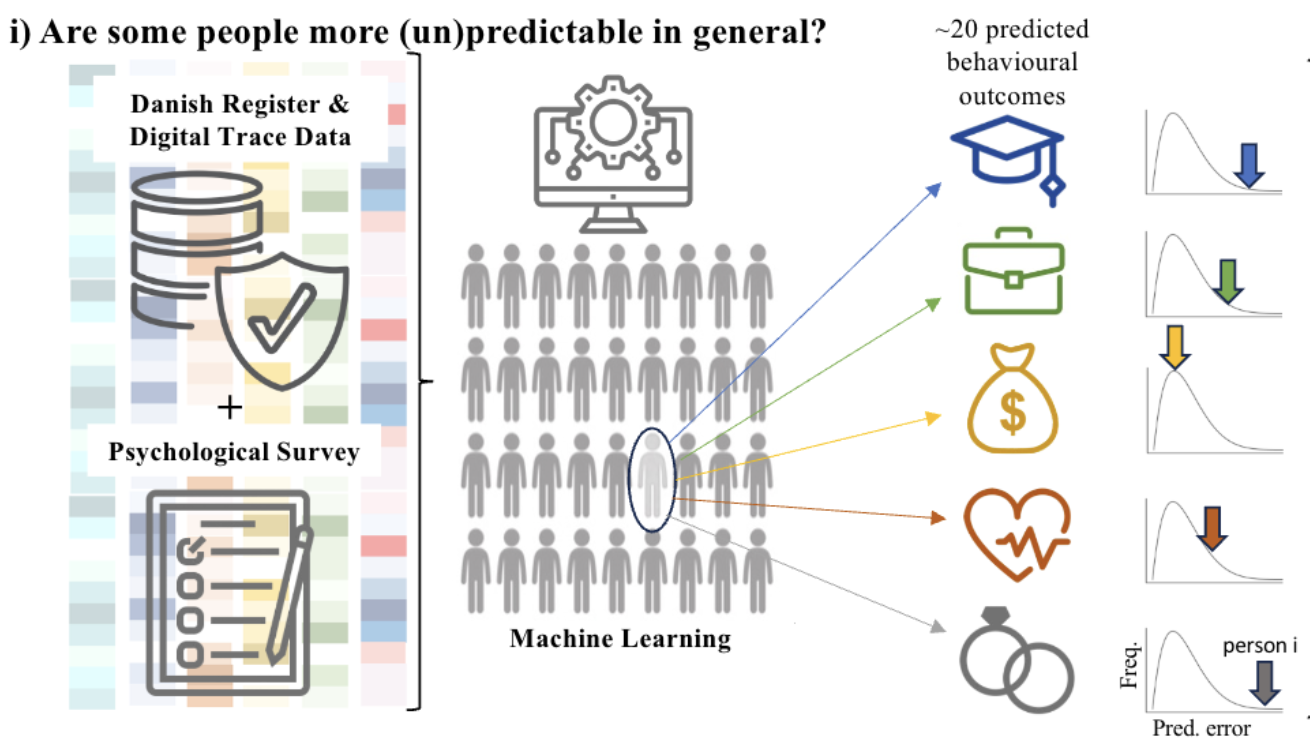
PhD student MSc Elisabeth Glunz is developing a series of psychological studies, including an experience-sampling paradigm, to investigate the cognitive, emotional, and cultural factors that shape resilience to extreme heat. Her research will also examine how experiences of heat influence perceptions of climate change. These questions will be studied both in controlled laboratory settings involving heat and UV exposure and in real-world environments, where sensing devices will capture measures including UV exposure, physical activity, and heart rate.


Postdoctoral researcher Dr Marc Büttner is developing machine-learning methods to model and predict individual vulnerability to extreme heat and to support personalised heat-risk communication. The models will integrate physiological, behavioural, and psychological data to characterise heat-related behaviour and risk-taking, generate personalised alerts and recommendations through a mobile application, and adapt guidance to individuals’ physiology, habits, and psychological profiles. At a broader level, the research will explore how insights from individual-level data can inform population-level resilience strategies and climate policy.


By combining behavioural and physiological research with data-driven modelling, ICARUS aims to improve our understanding of how individuals respond to extreme heat and translate these insights into effective, personalised interventions. Ultimately, the project seeks to contribute both to individual protection during heatwaves and to evidence-based strategies for strengthening societal resilience to a changing climate.


Project cover

Bernoulli-Euler-Digital with RDF-star-based Digital Edition of Jacob Bernoulli’s Travel Diary, Reisbüchlein

Research Project  | 6 Project Members

Bernoulli-Euler Digital application is a notable expansion of the Bernoulli-Euler Online (BEOL) project containing an interactive region-based digital edition of Jacob Bernoulli’s travel diary, Reisbüchlein, created using the RDF-star and SPARQL-star technologies. This platform serves as a dedicated research hub, focusing on exploring early modern mathematics and science. Its primary objective is to seamlessly integrate the extensive works and correspondences of the prominent members of the Bernoulli dynasty and the influential mathematician Leonhard Euler.


The knowledge graph of the Reisbüchlein edition is constructed using the JourneyStar ontology, an open-access ontology we developed to thoroughly and efficiently represent travel data by connecting metadata information such as dates and sources of information to the graph's edges. The ontology and its SHACL shapes, necessary for validating the graph data, are open-access on GitHub. The edition is created semiautomatically by using the textToRDFGraph pipeline to extract information from diary entries and represent the textual content in a machine-readable format. For this purpose, transcriptions generated using Transkribus and verified by the project team are used as the pipeline's input. This ontology-driven NLP pipeline retrieves the information from unstructured text and enriches the edition’s RDF-star graph with named entities and relations found between the entities. The RDF resources representing locations and persons given in the text are connected to their representation on the Wikidata and DBpedia repositories to allow the discovery of the information by following the nose principle. Thus, instead of creating yet another data silo of locations and persons, the named entities of the edition are connected to the third-party repositories and data is retrieved from these repositories upon access through federated searches. For example, for journey visualizations available on the web application, the coordinates of the origin and destination of journey stages are retrieved dynamically from Wikidata and used to create web-based visualizations.


The digital edition of all entries in the Reisbüchlein manuscript is presented in the Bernoulli-Euler Digital application with the facsimile of the pages, page transcriptions, interactive regions of the facsimile, and region transcriptions. The transcriptions contain all text markups and links to embedded named entities stored in the triplestore as standoff markups. This allows for analysis of the information using SPARQL, which enables queries for the texts about the embedded markups. For example, the user can query for all pages mentioning Geneva or all texts in which a certain phrase is written in italics.


Jacob Bernoulli described each of his journeys as an entry in Reisbüchlein with information about the duration, accommodations, events, means of transportation, costs, etc. The journeys are represented as RDF resources, with all main statements describing the journeys. The metadata are all added to the graph's edges with RDF-star statements. Upon accessing an entry through the web application, it retrieves the journey information from the triplestore vis SPARQL-star queries and displays it in a user-friendly form.

Project cover

Video for Scientific Outreach of the Research Network Responsible Digital Society

Research Networks of the University of Basel  | 8 Project Members

The research network "Responsible Digital Society" is involved in a variety of ways to strengthen the promotion of interdisciplinary exchange and cooperative research in the field of digital transformation.

In the area of research, the network creates forums for regular scientific exchange and supports the coordination of interdisciplinary research proposals. In the area of promoting young researchers, the network organizes summer and winter schools for them. In the area of networking, the network promotes regular exchanges with industrial partners in the region. In the area of outreach, the network strengthens the public dialogue by organizing colloquia and panel discussions on digitization with guests from various disciplines.