UNIverse - Public Research Portal
FEMALE avatar

Prof. Dr. Rosa Blakeman-Lavelle

Non Departmental Units
Profiles & Affiliations

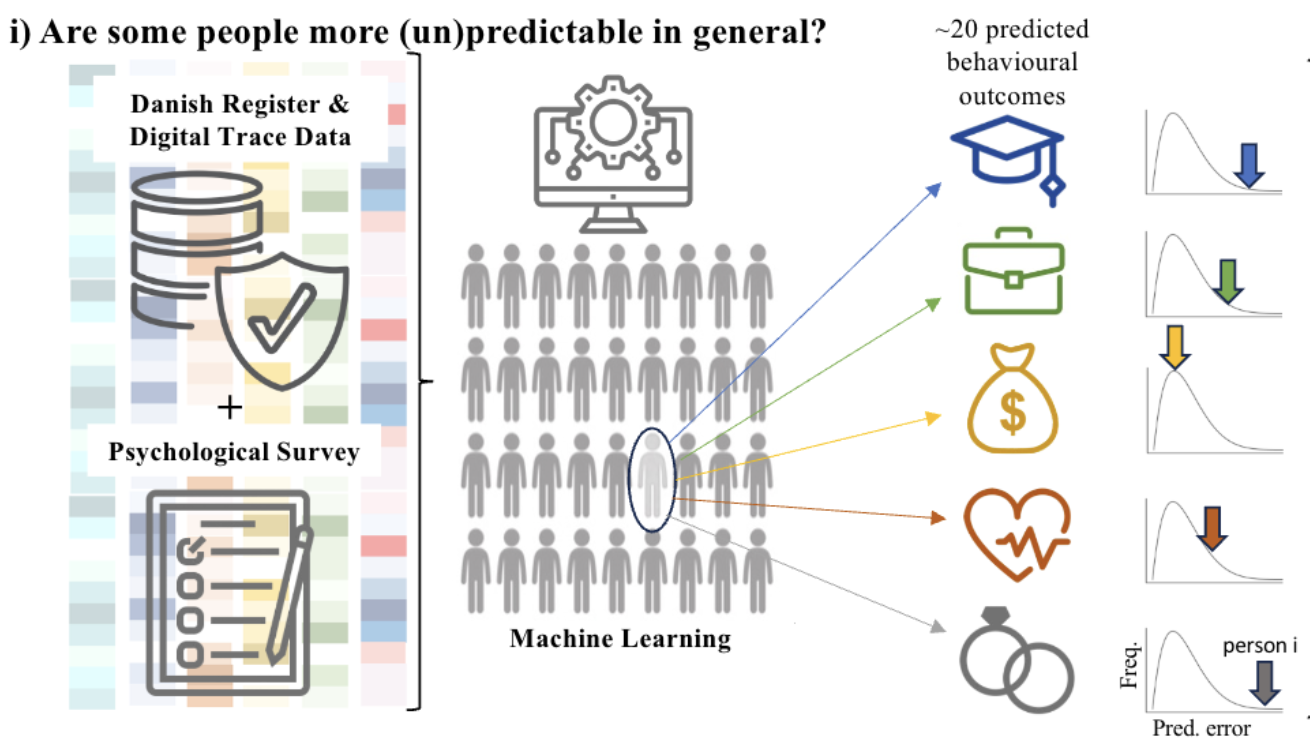
My research sits at the intersection of social science, data science, and artificial intelligence. I am particularly interested in how computational methods can help us understand human behaviour and address complex societal problems. A central theme of my work is moving beyond prediction alone: I use machine learning and large-scale data to investigate why people behave differently, when behaviour is predictable, and how computational approaches can contribute to the development and testing of social-scientific theory.


A second strand of my research focuses on developing and critically examining AI and machine-learning methods for the social sciences. This includes explainable and interpretable AI, the integration of machine learning with traditional statistical approaches, and questions around measurement, fairness, ethics, and responsible use. I am especially interested in methods that are not only technically effective, but also interpretable and useful to researchers and the people affected by algorithmic systems.


My work is interdisciplinary and spans a range of substantive areas, including environmental and educational psychology, climate change and sustainability, human wellbeing, inequality, and human rights. Across these domains, I am interested in combining social-scientific theory with novel data sources and computational methods to understand complex patterns of human behaviour and, ultimately, to generate insights that are both scientifically meaningful and socially useful.

Selected Publications

Lavelle-Hill, Rosa, Smith, Gavin, & Murayama, Kou. (2025). Bridging Traditional-Statistics and Machine-Learning Approaches in Psychology: Navigating Small Samples, Measurement Error, Nonindependent Observations, and Missing Data. Advances in Methods and Practices in Psychological Science, 8. https://doi.org/10.1177/25152459251345696

URLs
URLs

Lavelle-Hill, R., Smith, G., Deininger, H., & Murayama, K. (2025). An explainable artificial intelligence handbook for psychologists: Methods, opportunities, and challenges. Psychological Methods. https://doi.org/10.1037/met0000772

URLs
URLs

Lavelle-Hill, Rosa, Frenzel, Anne C., Goetz, Thomas, Lichtenfeld, Stephanie, Marsh, Herbert W., Pekrun, Reinhard, Sakaki, Michiko, Smith, Gavin, & Murayama, Kou. (2024). How the Predictors of Math Achievement Change Over Time: A Longitudinal Machine Learning Approach. Journal of Educational Psychology, 116, 1383–1403. https://doi.org/10.1037/edu0000863

URLs
URLs

Lavelle-Hill, Rosa, Harvey, John, Smith, Gavin, Mazumder, Anjali, Ellis, Madeleine, Mwantimwa, Kelefa, & Goulding, James. (2022). Using mobile money data and call detail records to explore the risks of urban migration in Tanzania. EPJ Data Science, 11. https://doi.org/10.1140/epjds/s13688-022-00340-y

URLs
URLs

Lavelle-Hill, Rosa, Smith, Gavin, Mazumder, Anjali, Landman, Todd, & Goulding, James. (2021). Machine learning methods for “wicked” problems: exploring the complex drivers of modern slavery. Humanities and Social Sciences Communications, 8. https://doi.org/10.1057/s41599-021-00938-z

URLs
URLs

Lavelle-Hill, Rosa, Goulding, James, Smith, Gavin, Clarke, David D., & Bibby, Peter A. (2020). Psychological and demographic predictors of plastic bag consumption in transaction data. Journal of Environmental Psychology, 72. https://doi.org/10.1016/j.jenvp.2020.101473

URLs
URLs

Selected Projects & Collaborations

Project cover

ICARUS - Adapting to extreme heat caused by climate change

Research Project  | 3 Project Members

Extreme heat is an increasingly important public health challenge. Heatwaves and excessive exposure to solar radiation contribute to illness and mortality, while ongoing climate change is expected to further intensify these risks. The ICARUS project—supported by a DKK 15 million Novo Nordisk Foundation Synergy Grant—brings together expertise in physiology, psychology, medicine, behavioural science, and data science to better understand how people respond to extreme heat and how associated health risks can be reduced.


PhD student MSc Elisabeth Glunz is developing a series of psychological studies, including an experience-sampling paradigm, to investigate the cognitive, emotional, and cultural factors that shape resilience to extreme heat. Her research will also examine how experiences of heat influence perceptions of climate change. These questions will be studied both in controlled laboratory settings involving heat and UV exposure and in real-world environments, where sensing devices will capture measures including UV exposure, physical activity, and heart rate.


Postdoctoral researcher Dr Marc Büttner is developing machine-learning methods to model and predict individual vulnerability to extreme heat and to support personalised heat-risk communication. The models will integrate physiological, behavioural, and psychological data to characterise heat-related behaviour and risk-taking, generate personalised alerts and recommendations through a mobile application, and adapt guidance to individuals’ physiology, habits, and psychological profiles. At a broader level, the research will explore how insights from individual-level data can inform population-level resilience strategies and climate policy.


By combining behavioural and physiological research with data-driven modelling, ICARUS aims to improve our understanding of how individuals respond to extreme heat and translate these insights into effective, personalised interventions. Ultimately, the project seeks to contribute both to individual protection during heatwaves and to evidence-based strategies for strengthening societal resilience to a changing climate.