Faculty of Humanities and Social Sciences
UNIverse - Public Research Portal

Professur für Iberoromanische Literaturwissenschaft

Projects & Collaborations

6 found
Show per page
Project cover

Mapping the Scriptures in Western Sephardi Literature

Research Project  | 2 Project Members

The project seeks to carry out an extensive study on the role and the use of the Bible for the Spanish and Portuguese Jews with a Christian background in newly founded communities of the so-called Western Sephardic Diaspora (1550-1800). A unique feature of these Iberian Jews with a Christian background was the central place occupied by the Bible in the educational, religious and cultural lives, far beyond what was common in the European Jewry of the Early Modern Age. For the first time in history, Jews extensively read and referred to their Bible in (Spanish) translation, opening up a broader audience, engaging more frequently and differently with Christians. Although the importance of the vernacular (above all Spanish) Bible translations is always mentioned in scholarship, no comprehensive study has been realized of the considerable output and content of these translations. Also, no comprehensive study on the particular reception and use of the (Spanish) Bible translations in Western Sephardic literature has been realized, although editions and manuscripts are nowadays largely available in digital collections. A groundbreaking feature of the project is the incorporation of resources and instruments provided by the Digital Humanities. The project aims to "map" the role and presence of the Bible in the Western Sephardi Diaspora in two ways: 1) through an online OA textual database containing a transcription of over 50 different editions of the Spanish Bible translations, as a big data corpus enabling types of distant reading, statistics and visualizations only possible with the help of Digital Humanities; 2) through a series of in-depth studies on the Bible in the Spanish and Portuguese Sephardic literature, such as: the presence and role of the Psalms for the fashioning of individual and collective Converso religiosity/religious identity; the use of the Bible in Spanish and Portuguese preaching of the Western Sephardic Diaspora; iii. the use of the Bible in Spanish/Portuguese polemical anti-Christian or apologetic literature; the presence and relevance of the Bible in both religious and secular Spanish and Portuguese literature produced in the Western Sephardic Diaspora. The studies of the second part benefit from the insights into the use of the Bible gathered with the database made in 1, allowing for finding special "hot spots" of biblical quotations, frequently quoted passages (in translation), the versions of the Bible used (e.g. the Spanish Jewish translation, a Spanish protestant translation, the Vulgata) etc. Other forms of data analysis will also become possible, as for instance, the correlation of biblical quotations with text sorts, targeted readers, authors, etc. The results will be: the online OA textual database (part 1) as a consultable platform and a Virtual Research Environment (VRE); a series of c. 300 transcriptions/editions as base and product for part 2; also available in OA digital format, contributing to the VRE; an international, multidisciplinary conference on the role of the Bible in the Western Sephardic Diaspora in a comparative confessional context; a series of monographic studies (dissertations) and articles.

Project cover

Hacia un teatro situado: la dramaturgia inédita de Raúl Ruiz

PhD Project  | 3 Project Members

This PHD project develops the concept of “situated theatre” to describe a form of theatrical practice in which the dramatic text, the performance space, and the historical, political, and social context transform one another. Moving beyond the traditional opposition between the text as a fixed work and performance as an ephemeral event, the study approaches dramaturgy as a permeable form of writing: one that preserves its literary specificity while remaining open to the material conditions of the present. Situated theatre does not treat space as a mere setting but incorporates its architecture, history, inhabitants, and conflicts as integral parts of the work.

The theoretical framework brings together literary and theatre studies, theories of performativity, site-specific art, Situationist thought, landscape-based architecture, and feminist epistemology. Drawing on Donna Haraway’s concept of “situated knowledges,” the thesis questions the supposed neutrality of space and the universalist claims of representation: every artistic practice emerges from a concrete, embodied position. This perspective makes it possible to understand place as an active entity and performance as a form of knowledge produced through the interaction of writing, bodies, territory, and audience.

The central corpus consists of Raúl Ruiz’s unpublished theatrical manuscripts, with a particular focus on Edipo Hiperboreo (1989). The study recovers a largely unknown dimension of the Chilean filmmaker’s work and examines the connections between theatre, cinema, literature, and exile within his poetics. It shows that Ruiz developed a multilingual, intermedial, and deliberately open form of writing that challenges the “theory of central conflict.” In Edipo Hiperbóreo, this poetics creates a dialogue between Sophocles’ Oedipus at Colonus, Cervantes’ The Trials of Persiles and Sigismunda, and Ruiz’s own experience of exile. The characters’ journey thus finds its formal counterpart in a text that moves across languages, traditions, and cultural spaces without settling permanently in any one of them.

The research combines literary analysis, manuscript study, translation, editing, and performance practice. The translation and edition of Edipo Hiperbóreo introduced blank spaces designed to be completed in response to each new performance location. This hypothesis was tested through a 2020 production at the Wildt’sches Haus in Basel. The experience demonstrated that artistic practice is not simply an application of theory, but a form of research capable of revising and expanding it. The production also revealed the decisive role of the audience as a living part of the context.

The thesis’s main contribution is the development of a model for research and artistic creation that brings text and performance, archive and present, literature and artistic practice into dialogue. At the same time, it initiated the critical recovery of Raúl Ruiz’s unpublished theatre and demonstrated that his permeable writing offers a particularly productive model for understanding how a work can move across periods and territories, engage with new contexts, and take on a different life in each performance.

Project cover

Silveiradas or the theological polemics of Abraham Gómez Silveira (1656-1741)

Research Project  | 1 Project Members

Edition of a multivolume manuscript work of 8 volumes, with an evolving title. Started as Disertaciones sobre el Mesías , the Spanish/Portuguese Jew of converso descent Abraham (olim Diego) Gómez Silveira (1656-1741) formulated a reply to Dissertations sur le Messie (1699) of the French Protestant theologian and minister Isaac Jacquelot, aimed at convincing the Jews to accept Christ as their Messiah. Silveira translates and glosses this work with theological arguments, most of them based upon interpretations of the Scriptures. However, this work evolves into a dynamic reflection on philosophy, religion and history, and, contrary to the polemical texts by other Sephardi authors written in vernacular (Spanish, Portuguese, occasionally Italian) they include a substantial part of rhetoric, word plays, literary devices and humor. The work, extant in manuscripts that are spread over a number of libraries -no library having a "complete" series, comprises over 2'500 pages, with an estimate of 600'000 words. Silveira repeats or rephrases many of his arguments, experimenting with a variety of literary genres, in which humanistic dialogue and poetry are mos prominent. By its breath, its originality and the fact that Silveira comments and reacts to so many authors and currents of religious, philosophical and political thought of his time the work occupies a unique place in Jewish (including Sephardic) Literature. We aim at a critical edition of this oevre in its original language -a very readable Spanish- accompanied by extensive commentaries and would very much like to exchange views over how such a work could or should be published. As for the author the general content of the present work of which no volume has hitherto been published and the context of Early Modern Sephardic Culture, both Wilke and Den Boer have authored relevant studies (full text copies available). Innovation presented by manuscript: the publication of these volumes adds a significant new dimension to Jewish-Christian polemics. Contrary to traditional Jewish polemics, the work does not center exclusively on divergent interpretations of the Bible or religion; contrary to other vernacular Sephardic polemics (as the Diálogos de Marrakesch published by Wilke at Brill 2014), the process of persuasion and conversion is not played out in depth. In stead, the author reflects on religious, philosophical and political events and trends of his time, including the Libertins and Freemasonry, and repeatedly formulates pleas for the free exchange of ideas and religious tolerance. The playful, literary character of the work is also unique in the context of religious polemics.

Project cover

Associated Researcher, Archivo Ruiz-Sarmiento, Instituto de Arte, Pontificia Universidad Católica de Valparaíso (PUCV)

Research Networks (Institutional Membership)  | 1 Project Members

As an associated researcher at the Archivo Ruiz-Sarmiento of the Pontificia Universidad Católica de Valparaíso, I am responsible for the study and recovery of the unpublished theatrical manuscripts of the Chilean filmmaker, writer, and theorist Raúl Ruiz (1941–2011). The archive preserves a corpus of approximately twenty dramatic works that have yet to be systematically organised, studied, and made accessible to readers and researchers.

Although Ruiz’s films and theoretical writings have received considerable international attention, his theatre remains a significant gap in scholarship on his work and in contemporary theatre studies. My research examines the place of these dramatic works within Ruiz’s broader oeuvre, as well as the formal, thematic, and procedural connections between his theatre, cinema, poetry, and theoretical writings. It combines archival work and genetic criticism with philological, dramaturgical, and intertextual analysis, encompassing the identification, description, and assessment of the manuscripts and the preparation of selected works for critical publication.

This institutional collaboration is further consolidated through an SNSF-funded research stay at the Archivo Ruiz-Sarmiento from 25 September to 24 October 2026. Conducted in collaboration with the archive’s director, Prof. Dr. Bruno Cuneo, the stay will enable the systematic review of the complete theatrical corpus and the selection and genetic-critical editing of unpublished works, opening new perspectives on Ruiz’s creative processes and making his theatrical writing accessible to a wider scholarly and public readership.

Project cover

Parir. Cuerpos, cuidados y maternidades en la literatura hispánica contemporánea

Research Project  | 1 Project Members

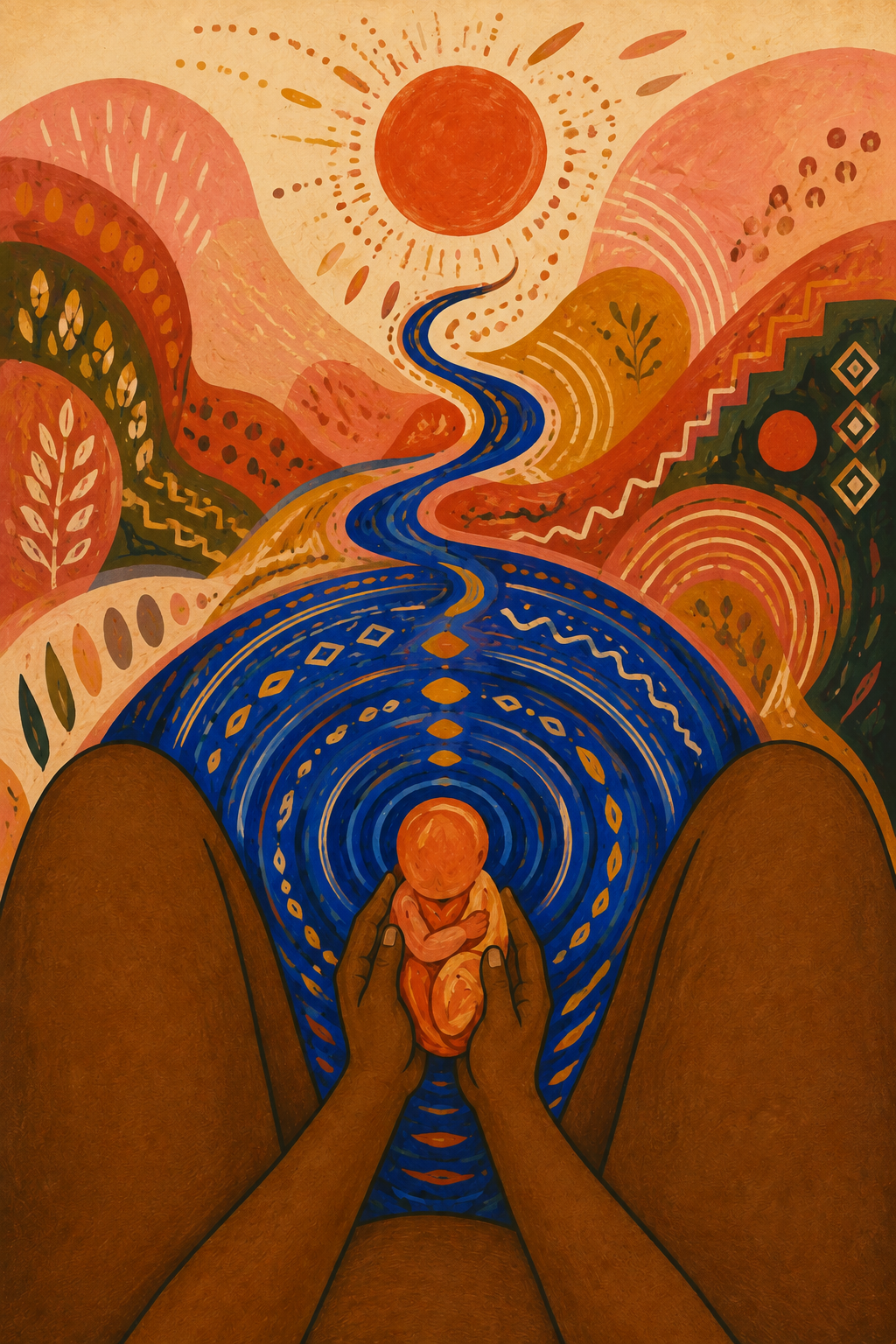
Giving Birth

Bodies, Care, and Motherhood in Contemporary Hispanic Literature

Childbirth is one of the most intense experiences of human life. It is the origin of our existence and yet has occupied a surprisingly marginal place in literary tradition. The event that makes all other stories possible has barely been narrated.

This absence invites us to question the patriarchal structures that have historically silenced women’s experiences — from the persecution of midwives and the dismissal of their knowledge to the many forms of physical, symbolic, epistemic, institutional, and obstetric violence that continue to undermine bodily autonomy and women’s ability to narrate their own experiences.

Today, the need to tell stories of childbirth is undeniable. The proliferation of online testimonies and collective and community spaces for sharing experiences shows a growing need to find words for an experience that, for a long time, has been confined to the private, the medical, or the unspeakable. And yet, even at a time when motherhood has become the subject of a growing body of literature, childbirth itself rarely occupies a central place in these narratives. Why?

This research project examines a selection of contemporary Hispanic literary texts in order to investigate this absence and analyse existing representations of childbirth. What is narrated? From where is it narrated? Which bodies are made visible? What remains untold?

The texts that make up the corpus move away from socially normative representations of motherhood and, through embodied experience, articulate unresolved tensions between rejection and love, tenderness and despair, what belongs to the self and what has been taken away, what can be narrated and what remains unspeakable. By foregrounding maternal ambivalence and resisting ideals of self-sacrificing motherhood, these writings challenge a historical, religious, and cultural legacy that has linked motherhood to sacrifice, self-denial, and permanent availability.

Contemporary Hispanic literature thus brings into focus the colonial and patriarchal structures that have produced and naturalised an unequal distribution of care and placed responsibility for sustaining life on women. This burden has operated largely in silence: it is presented as a natural inclination, an emotional obligation, or a biological destiny, turning maternal giving into an obligation that is difficult to name precisely because it is so easily confused with love, identity, or belonging.

For centuries, women’s experiences have been silenced, interpreted, and narrated by others. This project shifts the focus towards literature that narrates bodily experience from within. It asks not only what literature has said about childbirth and care, but also what has yet to find a form in which it can be narrated.

Analysing the existing literary corpus will make visible the forms of violence and dispossession experienced by maternal bodies and allow childbirth and care to be understood not only as bodily experiences, but also as spaces of epistemic resistance.

Objectives

1. Questioning and understanding the absence: Why has childbirth been so rarely narrated?

The first objective is to address this central question by examining the historical, political, and religious contexts that have shaped how childbirth has been understood and narrated. The project traces how the displacement of midwives’ knowledge, the medicalisation of childbirth, and patriarchal and colonial constructions of the female body have contributed to silencing its representation. This analysis provides the basis for understanding why, even today, childbirth remains at the margins of literary narratives.

2. Analysing existing narratives: What does literature show? What remains untold?

The second objective is to examine existing childbirth scenes and narratives in contemporary Hispanic literature, asking what they reveal, what they omit, and what this scarcity tells us. A central hypothesis of the project is that, although recent decades have produced a significant body of literature on motherhood, childbirth itself — as a bodily, sensory, and liminal experience — continues to occupy a marginal place within this corpus, overshadowed by other dimensions of maternal experience.

3. Expanding the corpus: inviting new narratives of childbirth

The third objective is to address this gap by inviting contemporary authors to write about childbirth, whether through fiction or autobiographical essay. In a second stage, the call will also extend to narratives by those who witness or accompany childbirth, reclaiming an outside perspective that does not silence the experience but complements it. The result will be a collective corpus devoted specifically to childbirth, bringing together different experiences, perspectives, and forms of writing, and contributing, through literature, to expanding the ways in which this event can be represented.

Project cover

The Life of the Dead. Objects and Dramaturgies of Presence

Research Project  | 1 Project Members

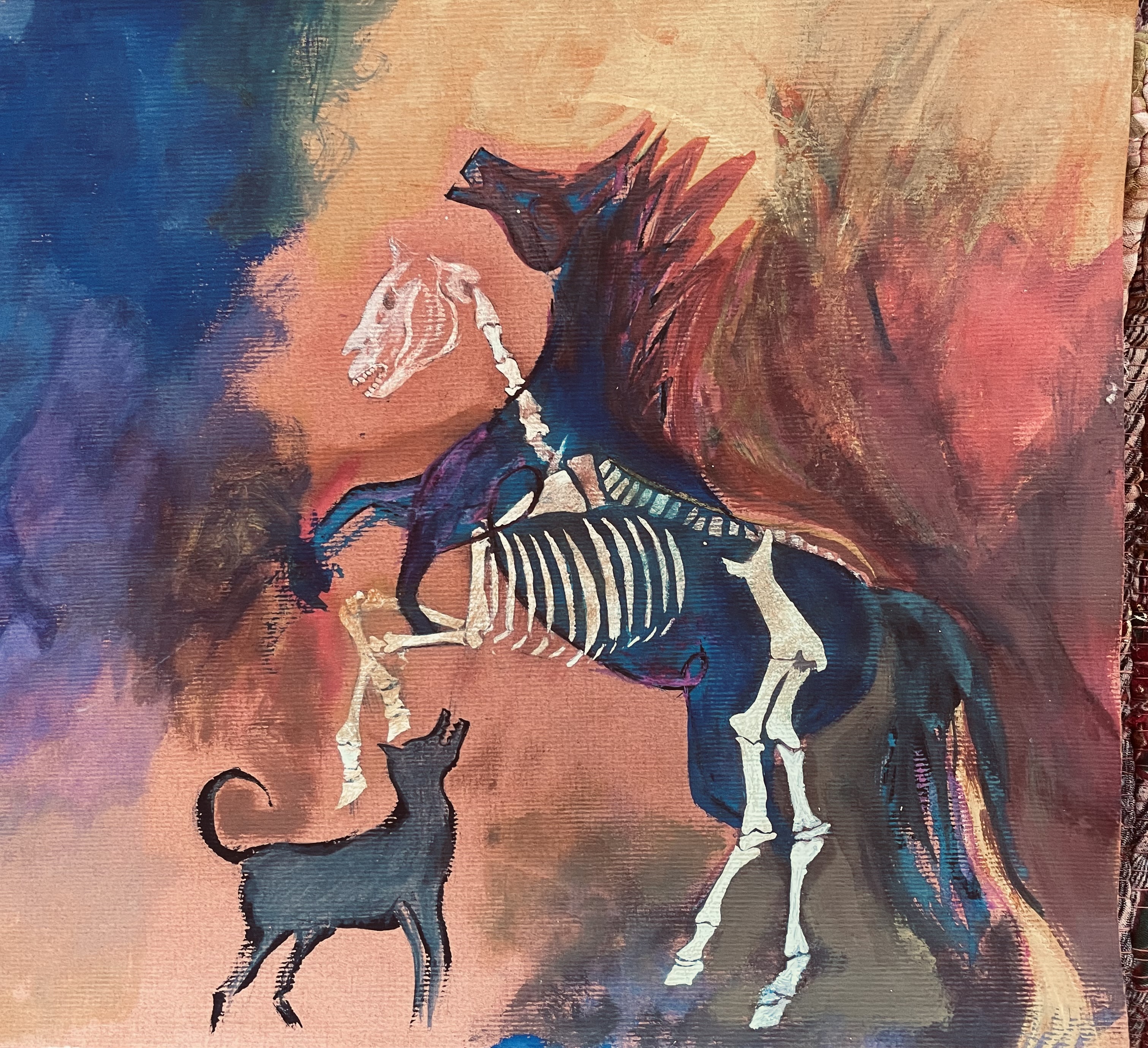
This dramaturgical research project explores the dialogue between life and death in literature and theatre through objects connected to funerary practices, mourning rituals, and the remembrance of the dead. Its central question is: How can writing turn the material presence of these objects into voice, narrative, and memory, and tell how the dead remain intertwined with the life of a community?

The project begins from the premise that objects are more than traces of a completed past or symbolic representations of absence. In certain cultural contexts, they actively mediate between different forms of existence: they preserve traces, carry memories, sustain bonds, and shape the relationship between the living, the dead, and the land. Their material presence does not simply evoke those who are gone. It also helps keep them present and allows them to continue acting in the world.

From a decolonial perspective, the project questions the divisions that have shaped Western modernity: life and death, subject and object, matter and spirit, nature and culture. These divisions have served as colonial ways of organising knowledge and ranking different understandings of the world. In “La vida y la muerte se hermanan” a poem by the Mapuche writer Graciela Huinao, life and death do not appear as opposing realities, but as dimensions that speak to one another, become intertwined, and transform each other. Her writing allows us to examine how literature preserves knowledge and relationships with the dead, while also revealing the fractures caused by the colonial imposition of a language, a territory, and an ontology.

The theoretical framework draws particularly on Achille Mbembe’s concept of the “earthly community.” Moving beyond an anthropocentric understanding of existence, Mbembe describes the Earth as a web of relations among human beings, animals, plants, minerals, invisible forces, ancestors, technologies, and objects. None of these entities exists in complete isolation; all are shaped through exchange and transformation. Within this relational understanding of the world, objects are not inert things. They can produce effects, carry forces, and create bridges between different forms of existence. Masks, urns, offerings, and other ritual objects can therefore be understood as “tools of life”: material forms that commemorate the dead, sustain collective memory, and connect life with death.

The project’s research-creation methodology brings theoretical and literary analysis into dialogue with practice-based research. Its process is shaped by the concept of “situated theatre,” developed in my dissertation Hacia un teatro situado: la dramaturgia inédita de Raúl Ruiz (Chaim, 2026). From this perspective, space and objects are not a passive setting for a finished work, but elements that take part in its writing. The project is built around an open theatrical text that changes in each location through an engagement with the objects found there, their material qualities, their ritual uses, and the memories they hold. Each new version becomes a situated form of theatrical inquiry into the ways objects mediate between the living and the dead.

This line of research-creation has developed through several stages: Auf der anderen Seite (High Life Festival, Binningen, 2020), Teatro para Una (Synaps Festival, Basel, 2023), Ich atme, du atmest – Día de Muertos (University of Basel, 2023), and Einatmen/Ausatmen (Wabe, Basel, 2023). These works form the practical foundation of the current project, which looks more closely at how funerary and commemorative objects make other ways of relating to death perceptible. The current stage focuses on writing as a meeting place for objects, the living, and the dead. Its aim is to show that the dead do not disappear entirely from our shared reality. They remain in objects, in the earth, in words, and in the relationships through which a community tells stories, remembers, cares, and reshapes its world.