

FutureFlow: A multi-fidelity modelling approach to improve regional-scale assessment of groundwater contribution to headwater dynamics
Research Project |
Headwater catchments, the uppermost drainage areas of stream networks covering about 60% of the continental surface, are the primary sources of freshwater for downstream hydrological systems, sustaining both natural and human ecosystem services. Despite their importance, predictions of future hydrological responses to climate change remain highly uncertain at regional scales. This uncertainty largely stems from the difficulty of representing hidden groundwater contributions to streamflow dynamics and of deploying and parameterizing groundwater flow models capable of capturing observed behaviours. With water scarcity expected to intensify across Europe, there is an urgent need to develop innovative modelling and projection approaches tailored to headwater catchments that explicitly represent groundwater contributions to streamflow and their role as a resilient subsurface water storage under climate change.
The FutureFlow project aims to address these challenges by bridging innovations from software engineering and groundwater hydrology. Its main objective is to develop an adaptive, model-switching multi-fidelity framework for regional-scale modelling that delivers well-calibrated and predictive groundwater flow models. This framework relies on robust decision algorithms to select and calibrate physically based models with hydrogeological properties capable of capturing current dynamics and forecasting future changes. It also aims to extrapolate these calibrated results to ungauged catchments to identify the hydrogeological factors controlling their vulnerability to climate change. The innovative modelling platform will leverage state-of-the-art models of different fidelities and automatically deploy them across diverse geomorphic and geological contexts at the European scale, using multiple data sources for model parameterisation and enabling automated assessment of model uncertainty.
The interdisciplinary consortium involves the Swiss Centre of Hydrogeology and Geothermics at the University of Neuchâtel (UniNE) and the French CNRS (UMRs Géosciences Rennes), complemented by experts in software engineering from IRISA–Laboratory for Research and Innovation in Digital Science and Technology also part of CNRS partner, specialists in data-model interaction from the University of Basel, hydro-climatology from the Laboratoire de Géologie of the ENS -PSL, and regional hydrogeological assessment from the French Geological Survey (BRGM). This collaboration brings together the essential expertise in climate science, hydrological modeling, quantitative hydrogeology, and software engineering required to achieve the research objectives of FutureFlow
In addition to providing significant advances in hydrogeological modelling and software engineering, the project will enable the first assessment of headwater catchment vulnerability to climate change based on a multi-fidelity modelling approach. Ultimately, the results of FutureFlow will provide new insights into the evolution of water resources across Europe under climate change, with critical societal benefits for the design of sustainable adaptation measures to climate changes tailored to local territorial characteristics.
Funding
FutureFlow: A multi-fidelity modelling approach to improve regional- scale assessment of groundwater contribution to headwater dynamics
SNF Projekt (GrantsTool), 06.2026-05.2030 (48)
PI : Schilling, Oliver.
Members (5)
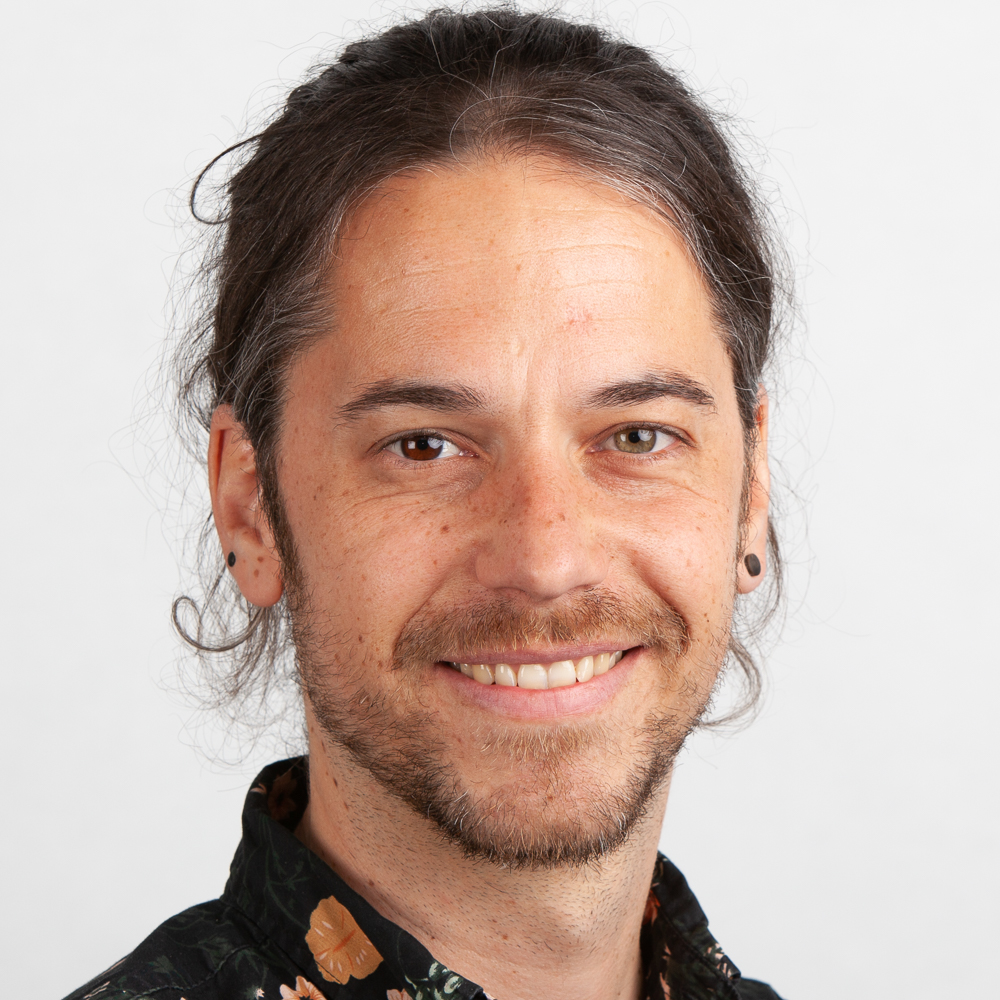
Oliver Schilling
PI

Daniela Waltl
PhD candidate (FG Hydrogeologie, Uni Basel)
CléMent Roques
Co-PI; Professor at University of Neuchâtel
Jean-Raynald De Dreuzy
Co-PI; Professor at University of Rennes